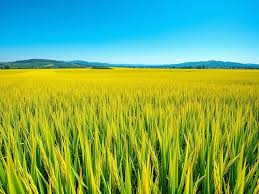
New Delhi: India has emerged as the world’s largest producer of rice, overtaking China with a record output of 150.18 million tonnes, Union Agriculture Minister Shivraj Singh Chouhan announced in New Delhi. The achievement places India at the top of global rice production, ahead of China’s output of 145.28 million tonnes, and underscores the country’s growing strength in agricultural productivity.
The announcement was made at an event where the minister released 184 newly developed varieties spanning 25 crops, a move aimed at further boosting yields, resilience, and farmer incomes. The new varieties have been developed through sustained research and innovation in the agricultural sector, reflecting India’s long-term focus on seed technology and crop improvement.
Highlighting the significance of the milestone, the minister said India’s success in developing high-yielding and climate-resilient seeds has transformed the country from a food-deficient nation into a major global food supplier. He described the rise in rice production as unprecedented and noted that India is now playing a critical role in supplying rice to international markets while maintaining robust domestic availability.
The minister also emphasised that the country currently holds adequate foodgrain stocks, ensuring national food security even as exports continue. He directed officials to ensure that the newly released seed varieties reach farmers without delay, stressing that timely access to improved seeds is essential for sustaining production gains and supporting rural livelihoods.
Since the crop variety notification process began in 1969, a total of 7,205 varieties have been officially notified in the country. Of these, 3,236 high-yielding varieties have been approved in recent years, reflecting an accelerated push towards modernising Indian agriculture and improving farm productivity.
The 184 newly released varieties include 122 cereals, six pulses, 13 oilseeds, 11 fodder crops, six sugarcane varieties, and 24 cotton varieties, including 22 Bt cotton types. In addition, one variety each of jute and tobacco has also been introduced. Together, these releases are expected to strengthen crop diversity, enhance resistance to pests and climate stress, and reinforce India’s position as a leading agricultural producer on the global stage.
Sorry, there was a YouTube error.