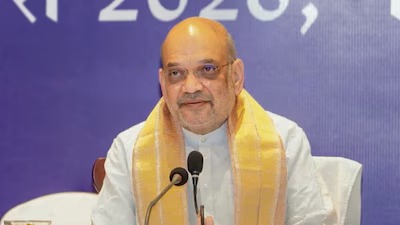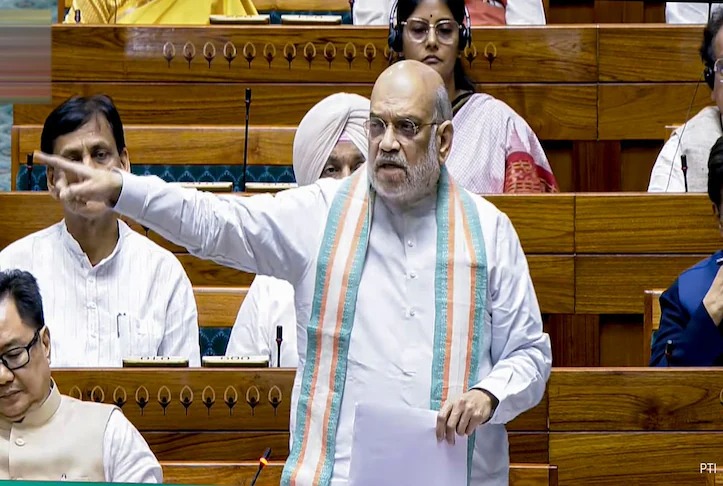
New Delhi: Union Home Minister Amit Shah declared in Parliament that Maoist violence in India is nearing its complete end, stating that the country has effectively become free from Naxal influence after years of sustained security operations and development initiatives.
Addressing a discussion in the Lok Sabha ahead of the government’s deadline to eliminate Left Wing Extremism, Shah said the insurgency that once affected large parts of the country has now almost disappeared. He noted that the process of completely eliminating the threat is in its final stage and the nation will be officially informed once it is formally concluded.
Shah highlighted the transformation taking place in Bastar in Chhattisgarh, which was long considered one of the most prominent strongholds of Maoist activity. According to him, the region is now witnessing steady development after decades of violence and instability.
He explained that extensive welfare and infrastructure initiatives have been implemented across the region. Schools have been opened in villages, ration shops have been established to ensure food security, and health facilities including primary and community health centres have been set up across local administrative units. Residents have also been issued Aadhaar and ration cards, enabling them to access government welfare programmes and receive subsidised food grains.
Shah stated that for many years the region remained under the shadow of what he described as “Red Terror”, which prevented development from reaching tribal communities. With the decline of Maoist activity, he said Bastar is now moving toward growth and stability.
The Home Minister also reiterated the government’s policy toward remaining insurgents. He said the administration remains open to dialogue with those willing to surrender and abandon violence, assuring that rehabilitation and reintegration programmes are available for such individuals. At the same time, he emphasised that armed groups continuing violent activities would face strict action from security forces.
During the debate, Shah also criticised the long period of governance by Indian National Congress, arguing that the lack of development in tribal regions contributed to the growth of Maoist influence. He pointed out that the conflict has claimed around twenty thousand lives over the years and affected millions of people across several states.
Shah recalled that former Prime Minister Manmohan Singh had once described Naxalism as one of the country’s most serious internal security challenges, noting that the issue had persisted for decades before recent efforts significantly reduced its impact.
Sorry, there was a YouTube error.