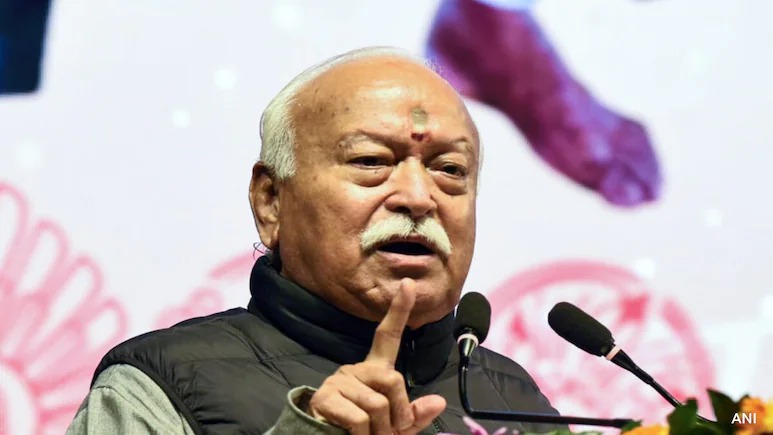
New Delhi: Rashtriya Swayamsevak Sangh chief Mohan Bhagwat has said that India does not require constitutional endorsement to be described as a Hindu nation, asserting that it is an inherent cultural reality rather than a matter of legal terminology. His remarks came during an event in Kolkata marking 100 years of the RSS.
Addressing the gathering, Bhagwat stated that India is, and will continue to remain, a Hindu nation as long as Indian culture is valued and preserved by its people. He said the country’s civilisational identity does not depend on formal recognition in the Constitution, comparing it to natural truths that exist regardless of official approval.
He explained that anyone who considers India their motherland and respects its cultural heritage is part of this national identity. According to him, even the presence of a single individual who believes in and honours the legacy of India’s ancestors is enough to affirm the country’s Hindu character. He described this belief as central to the ideological foundation of the RSS.
Bhagwat added that even if Parliament were to amend the Constitution in the future to explicitly include such terminology, it would not alter the core reality. He emphasised that the organisation does not attach importance to specific words but to cultural continuity. He also clarified that Hindutva does not support discrimination based on birth and rejected the notion that the caste system defines Hindu identity.
During his address, Bhagwat sought to counter perceptions that portray the RSS as hostile toward Muslims. He invited people to visit RSS offices and local shakhas to observe its functioning firsthand. He said the organisation’s work is transparent and open to scrutiny.
According to Bhagwat, many people who have engaged with the organisation now recognise it as nationalist and focused on organising and protecting Hindus, but not as anti Muslim. He stated that individuals willing to understand the RSS should form opinions based on direct observation rather than assumptions.
He concluded by saying that while openness and dialogue can address misunderstandings, those unwilling to learn or engage cannot be persuaded otherwise.
Sorry, there was a YouTube error.