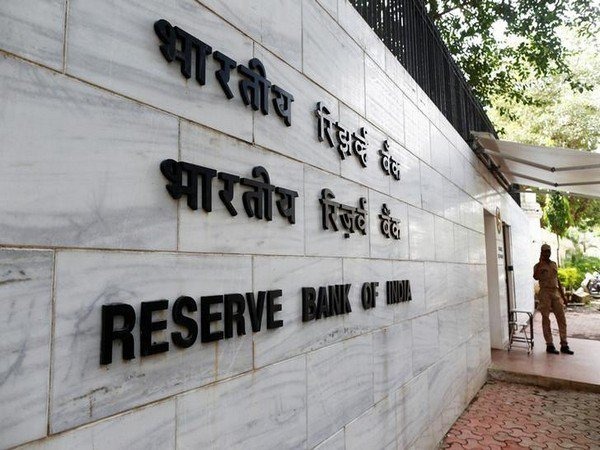
Mumbai: India recorded a current account surplus of $13.5 billion, or 1.3% of GDP, in the fourth quarter of FY2024-25, according to data released by the Reserve Bank of India (RBI) on Friday. This marks a sharp improvement from the $4.6 billion surplus in the same quarter last year and a turnaround from the $11.3 billion deficit in the previous quarter. The surplus was largely driven by strong growth in services exports and an increase in remittances from Indians working abroad.
Despite the positive fourth-quarter performance, the overall current account for the full fiscal year remained in deficit. The deficit stood at $23.3 billion, or 0.6% of GDP, slightly lower than the $26 billion (0.7% of GDP) recorded in 2023-24. Merchandise trade deficit for the quarter rose to $59.5 billion from $52 billion a year ago but improved from the $79.3 billion recorded in Q3.
The RBI noted that net services receipts climbed to $53.3 billion in Q4, up from $42.7 billion in the same period last year, with major contributions from business and computer services. Personal transfer receipts, mainly consisting of remittances, increased to $33.9 billion from $31.3 billion a year earlier. Primary income outflows, primarily investment income payments, declined to $11.9 billion from $14.8 billion in Q4 FY24, providing additional relief to the current account.
However, foreign direct investment (FDI) inflows were tepid at just $400 million in Q4 FY25 compared to $2.3 billion in the same period last year. Foreign portfolio investments (FPI) saw a net outflow of $5.9 billion, contrasting with a net inflow of $11.4 billion a year ago. There was also an accretion of $8.8 billion to the foreign exchange reserves in the March quarter, lower than the $30.8 billion added in Q4 FY24.
For the full fiscal year, FDI inflows amounted to just $1 billion, significantly down from $10.2 billion the previous year. FPI inflows also declined sharply to $3.6 billion, compared to $44.1 billion in FY2023-24. Commenting on the data, ICRA Chief Economist Aditi Nayar noted that while the Q4 surplus was expected due to seasonal factors, the magnitude was higher than anticipated, aided by a surprise dip in primary income outflows. However, she warned that the current account could revert to a deficit in Q1 FY26 due to expectations of a higher trade gap and a moderation in services exports.
1
/
8


#JustCasual With Sanket Bhandari | “Govt Forced Us to Protest in Assembly”
#JustCasual With Sadanand Shet Tanavade | “Special Status Not Possible for Goa”
#JustCasual With Utpal Parrikar | “Ready To Align With Like-Minded People For CCP”
#JustCasual With Yuri Alemao | FROM COCKPIT TO ASSEMBLY FLOOR, Yuri Alemao’s TURBULENT life
#JustCasual With Amit Patkar | “Amit Patkar Ko Gussa Kyun Aata Hai?”
#JustCasual With Joshua De Souza Speaks Candidly on Mapusa, Politics & Michael Lobo,”
1
/
8