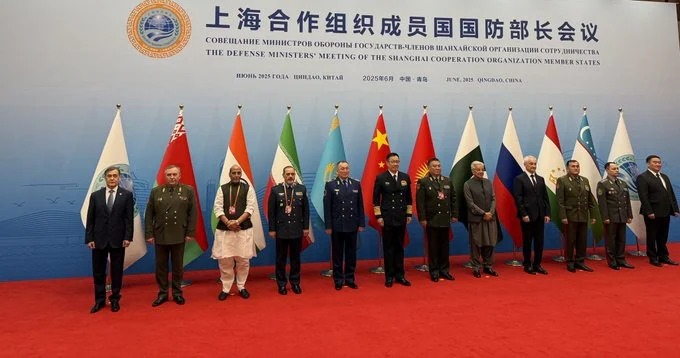
New Delhi: In a bold diplomatic move, India refused to endorse the joint statement at the Shanghai Cooperation Organisation (SCO) Defence Ministers’ meet in Qingdao, China, objecting to what it called a deliberate omission of the recent terror attack in Pahalgam and the inclusion of Balochistan—an apparent attempt to malign India at Pakistan’s behest.
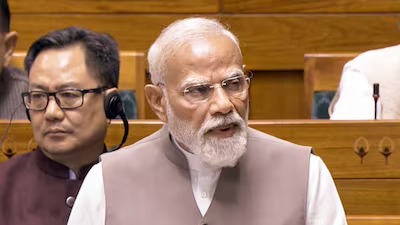
Defence Minister Rajnath Singh, representing India at the high-level summit, declined to sign the final communique after the document failed to acknowledge the Pahalgam terror strike in Jammu and Kashmir that killed 26 civilians. The document instead included references to unrest in Pakistan’s Balochistan province, implicitly pointing fingers at India—a claim New Delhi has vehemently denied for years.
“India is not satisfied with the language of the joint document,” a Defence Ministry official said. “There was no mention of the terrorist attack in Pahalgam, while incidents in Pakistan were selectively included. Consequently, India refused to sign the joint declaration, and no joint communique has been issued.”
The omission is being seen as a result of Pakistan’s influence, bolstered by China, which currently chairs the SCO. India suspects that its strong position against terrorism was sidelined under pressure from the China-Pakistan alliance, both of whom continue to block any criticism of Pakistan-sponsored terror at international forums.
Addressing his counterparts from the 10 SCO member countries—China, Russia, Pakistan, Iran, Belarus, Kazakhstan, Kyrgyzstan, Tajikistan, and Uzbekistan—Singh said the region’s most pressing threats arise from terrorism, radicalisation, and the erosion of trust among nations.
“Terrorism and the proliferation of Weapons of Mass Destruction in the hands of non-state actors cannot coexist with peace and prosperity,” he said. “Those who nurture and support terrorism for their narrow interests must face consequences. The SCO must not shy away from naming and condemning such nations.”
In a thinly veiled reference to Pakistan, the Defence Minister highlighted the cross-border nature of the Pahalgam attack, in which victims were targeted based on their religious identity. The Resistance Front (TRF), a known proxy of the UN-designated terror group Lashkar-e-Taiba, had claimed responsibility for the assault. Singh reiterated India’s “zero tolerance” policy on terrorism and warned that India would continue to exercise its right to pre-empt and retaliate against such threats.
“We have shown that the epicentres of terrorism are no longer safe. Our resolve remains unshaken,” he said.
Singh’s strong stance also aligns with India’s post-Operation Sindoor diplomacy, where New Delhi launched an international outreach campaign, dispatching delegations to key global capitals to underline its counter-terrorism doctrine and highlight Pakistan’s role in fostering extremism.
India’s move to distance itself from the SCO joint declaration sends a firm message: that the country will not be part of any consensus that undermines its fight against terrorism or misrepresents its role in regional stability.
With this refusal, India has once again put the spotlight on the growing challenge of selective narratives at multilateral platforms. It also raises questions about the SCO’s ability to act as a genuine regional security bloc when foundational issues like terrorism are handled with geopolitical bias.
As Singh concluded his address, he called upon all member states to unequivocally condemn terrorism in all forms and bring its perpetrators, financiers, and backers to justice—without exception or selective silence.
Sorry, there was a YouTube error.