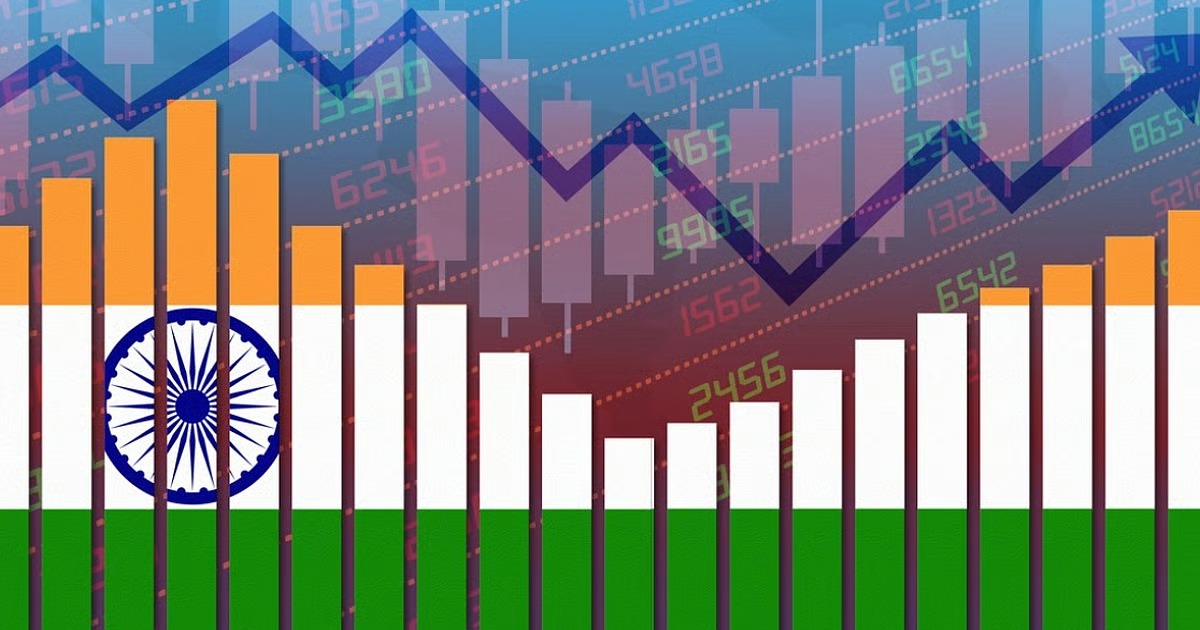
New Delhi: India is on track to become the world’s third largest economy by 2030, with its gross domestic product projected to reach $7.3 trillion, according to an official assessment released on Monday. With its GDP currently valued at $4.18 trillion, India has already overtaken Japan to secure the fourth position globally and is expected to surpass Germany within the next two and a half to three years.
The assessment highlights that India’s growth momentum has exceeded expectations, with economic expansion reaching a six quarter high in the second quarter of the 2025–26 financial year. This performance underlines the country’s resilience despite ongoing global trade and policy uncertainties. Domestic factors, particularly strong private consumption, have played a key role in driving this expansion.
Real GDP growth accelerated to 8.2 percent in the second quarter of FY 2025–26, improving from 7.8 percent in the previous quarter and 7.4 percent in the final quarter of FY 2024–25. Real gross value added also grew by 8.1 percent, supported by strong performance in the industrial and services sectors, which continue to act as growth engines.
High frequency economic indicators suggest that activity levels remain robust. Inflation has stayed below the lower tolerance threshold, unemployment trends have shown improvement, and export performance has strengthened. Financial conditions remain supportive, with healthy credit flows to the commercial sector and firm demand conditions, particularly in urban consumption.
India is positioned among the fastest growing major economies globally and is seen as capable of sustaining this momentum over the medium term. The country aims to achieve high middle income status by 2047, the centenary year of independence, building on ongoing structural reforms, steady economic growth, and social development.
Reflecting this optimism, the growth forecast for FY 2025–26 has been revised upward to 7.3 percent. Factors supporting domestic growth include strong demand, tax rationalisation, softer crude oil prices, front loaded government capital expenditure, and accommodative monetary and financial conditions backed by stable inflation.
Looking ahead, favourable agricultural prospects, resilient services exports, strong corporate and financial sector balance sheets, and continued reforms are expected to sustain economic activity. The current macroeconomic environment has been described as a rare phase of high growth combined with low inflation, offering a strong platform for India’s long term economic ascent.
Sorry, there was a YouTube error.