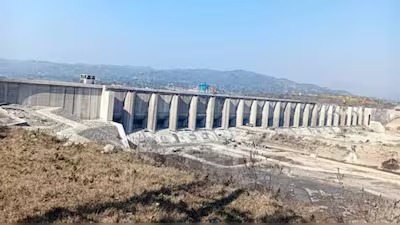
New Delhi: India is preparing to stop the flow of surplus water from the Ravi River into Pakistan as the long delayed Shahpur Kandi dam project on the Jammu and Kashmir and Punjab border approaches completion by March 31. The move is expected to intensify Pakistan’s existing water stress, particularly amid strained bilateral relations.
For decades, excess Ravi waters flowed across the border due to inadequate storage infrastructure on the Indian side. With the dam now nearing operational readiness, that outflow is set to end from April, enabling India to utilise its full allocation from the eastern rivers under the 1960 Indus Waters Treaty.
The development comes in the backdrop of heightened tensions following the Pahalgam terror attack last year, which New Delhi attributed to Pakistan backed elements. In response, Prime Minister Narendra Modi announced a series of measures against Islamabad, including the suspension of the Indus Waters Treaty.
Officials in Jammu and Kashmir have underscored that the Shahpur Kandi project is crucial for irrigation and water security in drought prone Kathua and Samba districts. The dam will allow regulated storage and diversion of Ravi waters that previously went unused.
Under the Indus Waters Treaty, brokered in 1960, India has unrestricted rights over the eastern rivers Ravi, Beas and Sutlej, while Pakistan has primary access to the western rivers Indus, Jhelum and Chenab. The Shahpur Kandi dam falls within India’s legitimate share, reinforcing New Delhi’s position that it is exercising treaty compliant rights rather than restricting allocated flows.
The project, which received renewed approval and central financial assistance in 2018, is expected to bring irrigation benefits to large tracts of farmland in Punjab and parts of Jammu and Kashmir. Alongside progress on several hydropower projects over the Chenab, the dam underscores India’s intent to fully harness its water resources.
With completion imminent, India is poised to end the routine spillover of Ravi waters across the border and consolidate control over its eastern river entitlements.
Sorry, there was a YouTube error.