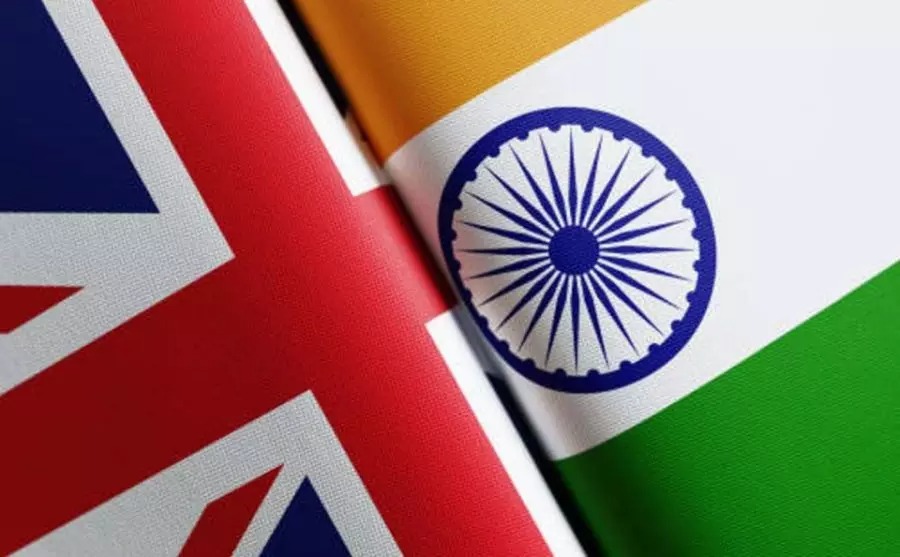
New Delhi: The free trade agreement between India and United Kingdom is likely to come into effect in April 2026, with both sides completing the final procedural steps required for its implementation.
Signed on July 24, 2025, the Comprehensive Economic and Trade Agreement is currently undergoing ratification in the British Parliament. In India, the pact requires approval from the Union Cabinet before it can formally enter into force. Once cleared, the agreement will be operational from a mutually agreed date.
Alongside the trade deal, both countries have signed the Double Contributions Convention, which aims to prevent temporary workers from paying social security contributions in both jurisdictions at the same time. This arrangement is expected to be implemented in parallel with the trade agreement.
Under the pact, 99 percent of Indian exports will gain duty free access to the British market. In return, India will reduce tariffs on a range of UK goods, including automobiles and Scotch whisky. The agreement is projected to raise annual bilateral trade by approximately 34 billion dollars and double total trade to around 120 billion dollars by 2030, from the current level of about 60 billion dollars.
Beyond trade in goods, the agreement covers services, investment facilitation, labour mobility and public procurement, while sensitive sectors such as agriculture and certain financial services remain outside its scope for now.
Indian industries including textiles, gems and jewellery, leather, handicrafts and engineering goods are expected to benefit significantly from tariff reductions and simplified regulatory standards. The easing of technical barriers and compliance requirements is also likely to accelerate market access and reduce costs for exporters on both sides.
Sorry, there was a YouTube error.