New Delhi: India has reaffirmed that its energy policy will continue to be guided by national interest, price stability and security of supply, even as speculation grows about possible changes in crude purchases after the recent trade understanding with the United States. The government emphasised that decisions on oil imports are driven by domestic economic needs rather than external pressure.
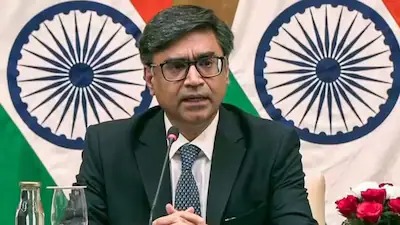
Foreign Secretary Vikram Misri stated that India, as a developing nation dependent on imports for the majority of its energy requirements, must ensure uninterrupted and affordable access to fuel. He pointed out that the country relies on foreign sources for nearly 80 to 85 percent of its oil and gas needs, making it essential to protect consumers from inflation caused by volatile global prices.
He explained that international energy markets have experienced repeated disruptions in recent years, creating uncertainty in supply chains. Because of this situation, India follows a strategy of purchasing crude from a wide range of suppliers to maintain stability. According to him, the country also plays a significant role in balancing global demand due to its large consumption levels.
The Foreign Secretary highlighted that India imports oil from dozens of nations and does not depend on any single partner. The composition of suppliers can change depending on market conditions, transportation costs and availability, and greater diversification strengthens national energy security.
Misri added that actual procurement choices are made by public and private sector companies after evaluating risks and commercial factors. These firms operate under established accountability systems and are expected to act in line with the broader national interest.
The clarification comes after announcements from Washington following talks between President Donald Trump and Prime Minister Narendra Modi. The United States indicated that India would expand purchases of American energy and reduce dependence on Russian crude as part of a wider trade arrangement. However, New Delhi has avoided confirming any binding commitment on this issue.
Earlier statements from the Ministry of External Affairs stressed that the needs of India’s 1.4 billion citizens would remain the central consideration in all energy decisions. Officials reiterated that sourcing policies would continue to evolve according to market realities and international developments.
Recent trade data shows a gradual decline in Russian oil imports, which fell to around 1.215 million barrels per day in January, lower than the previous month. The government maintained that such variations reflect commercial calculations rather than a shift in long term policy.