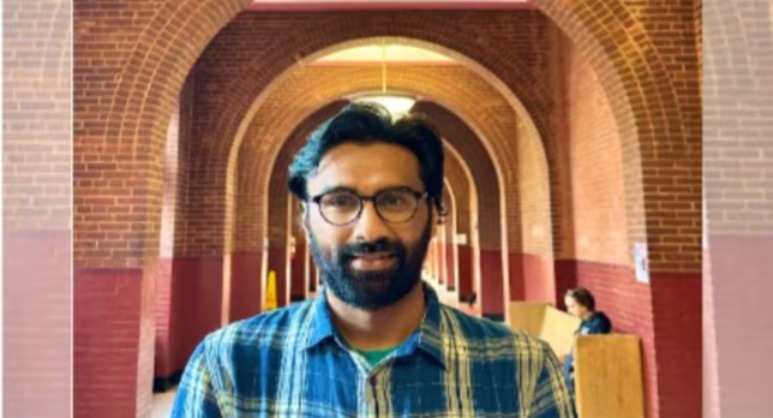
New Delhi: In a move that has sparked intense debate over academic freedom and free speech, Badar Khan Suri, an Indian postdoctoral fellow at Georgetown University, has been detained by U.S. immigration authorities. The allegations against him include spreading Hamas propaganda, a charge that highlights the Trump administration’s broader crackdown on pro-Palestinian activism. This development is particularly significant given Suri’s background in peace and conflict studies, which underscores the complexities of balancing national security concerns with the principles of academic inquiry.
Badar Khan Suri, a postdoctoral fellow at Georgetown University, was arrested by agents from the Department of Homeland Security outside his home in Virginia. The arrest came after his visa was revoked, with allegations that he was actively spreading Hamas propaganda and promoting antisemitism on social media. Suri is also accused of having close connections to a suspected terrorist, further complicating his situation.
Suri holds a student visa and is married to Mapheze Saleh, a U.S. citizen of Palestinian heritage. His lawyer argues that Suri is being targeted due to his wife’s background, raising questions about the fairness of the detention. The U.S. Department of Homeland Security claims that Suri’s activities render him deportable under U.S. immigration law, specifically citing a rarely used provision that allows deportation if an individual’s presence is deemed a threat to U.S. foreign policy.
Suri completed his PhD in Peace and Conflict Studies from Jamia Millia Islamia in 2020 and was conducting research on peacebuilding in Iraq and Afghanistan. His detention is part of a larger crackdown on pro-Palestinian activism in the U.S., following recent protests and arrests of other activists. Georgetown University has expressed support for Suri’s right to free inquiry and expects a fair legal process.
This case follows a pattern of increased scrutiny of student activists, including the recent self-deportation of another Indian student, Ranjani Srinivasan, who was involved in pro-Palestine protests. The situation highlights the tension between enforcing national security and protecting academic freedom, raising concerns about the implications for free speech in the U.S.
Sorry, there was a YouTube error.