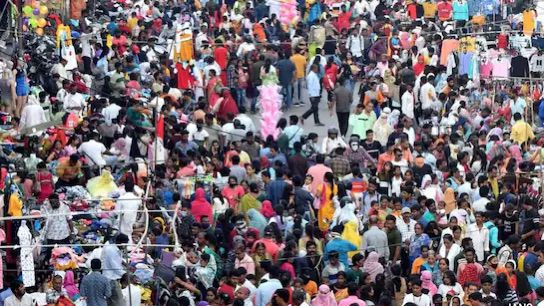
Kolkata: India’s population is projected to stabilise by around 2080 at approximately 1.8 to 1.9 billion, driven by a steady decline in the total fertility rate (TFR), which has now fallen below the replacement level to 1.9. Experts say the country is undergoing a significant demographic transition marked by a sharp drop in birth rates over the past two decades.
In 2000, India’s TFR stood at 3.5; today, it has nearly halved. According to demographic assessments, the nation’s population will peak before 2080 and remain under two billion, signalling a long-term shift towards smaller families.
The decline in fertility is attributed to rising development indicators, particularly higher levels of female education. With more women pursuing higher studies and careers, decisions around marriage and childbirth have changed considerably. Increased use of contraceptives, greater awareness, and wider access to reproductive healthcare have also played a major role.
Experts note that couples today exercise more control over the timing and number of children, leading to smaller family sizes. Late marriages and expanding economic opportunities have further influenced reproductive choices. Data shows that fertility levels vary sharply across education levels—while illiterate groups still have TFRs above three, the rate drops to between 1.5 and 1.8 among educated sections.
Examples from states illustrate this trend. Kerala achieved replacement-level fertility in the late 1980s and now has a TFR of around 1.5. West Bengal has recorded one of the country’s biggest fertility declines, with its TFR dropping from 1.7 in 2013 to 1.3 in 2023. The state now ranks among the lowest fertility regions nationally, alongside Tamil Nadu and just above Delhi, and holds the lowest urban TFR in India.
Even as birth rates fall, life expectancy continues to rise due to improvements in healthcare. More people are living beyond 60, bringing new challenges related to elderly care, especially as younger populations migrate for work. Discussions around solutions such as community day-care facilities for senior citizens are gaining momentum.
Demographers emphasise that India’s shifting population structure will have far-reaching implications for healthcare, employment, and social support systems, making it essential to plan ahead for a changing demographic future.