


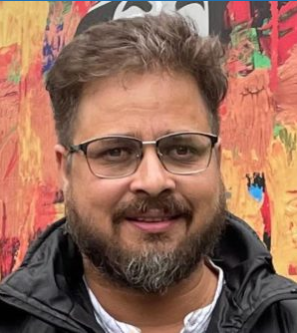
Over the past week, political chatter in Goa has reached a crescendo — not because of governance or development, but due to a relentless stream of media reports suggesting the imminent ouster of Art and Culture Minister Govind Gaude.
Every day seems to bring a new twist in this ongoing saga: Gaude will be sacked today, he’s been asked to resign, the Chief Minister is rushing to Raj Bhavan, or Gaude is in urgent talks with the BJP high command. Speculations about his replacement — be it Ramesh Tawadjar or another BJP loyalist — are floated like trial balloons with no solid backing.
The frenzy raises serious questions: Is the BJP leadership in Goa truly considering Gaude’s removal, or is this a calculated media distraction? More critically, has Goan journalism — at least a section of it — allowed itself to become a willing pawn in political theatre, diverting public attention from core issues that matter far more to the average Goan?
Let’s start with the facts. Govind Gaude, BJP MLA and Cabinet minister, stirred political waters with his open accusations about corruption in the state administration. His outbursts were directed not at faceless bureaucrats, but at the highest echelons of power — including veiled barbs at Chief Minister Pramod Sawant.
Since then, Gaude has remained defiant, refusing to retract or soften his stance. In any other functional democracy, such allegations would either prompt an internal investigation or disciplinary action. But in Goa, we have neither. Instead, we are served a steady dose of media speculation with no confirmation from either side.
The Chief Minister has maintained an uneasy silence. BJP functionaries, too, have refrained from either confirming or denying Gaude’s exit. Damodar Naik — The BJP State president — has been equally ambiguous. And Gaude himself has continued to meet with party leaders, leaving room for ambiguity.
The entire episode smacks of political shadowboxing — full of sound and fury, but signifying little. The lack of clarity has allowed media outlets to fill the vacuum with theories, gossip, and unnamed sources, reducing journalism to a speculative sport rather than a watchdog of democracy.
This raises a more pressing concern: Why is the media so obsessed with this single political storyline while core governance issues are being ignored? Goa is grappling with serious challenges — crumbling roads, water shortages in multiple talukas, erratic electricity supply even in urban areas, a slowing tourism sector, and high youth unemployment. Yet these pressing matters receive only passing mention in news cycles dominated by the Gaude drama.
Is this fixation by design? Some observers argue that the narrative is being engineered — whether by political strategists or opportunistic media houses — to shift public discourse away from real issues. With civic dissatisfaction rising and Lok Sabha election results fresh in memory, it’s convenient for those in power to feed the public a different spectacle.
A Cabinet shake-up, or even just the threat of one, provides the perfect cover to delay discussions on uncomfortable subjects like governance failures, corruption probes, and public welfare.
Gaude may very well be on his way out — or he may survive this storm. But what’s more troubling is the way this entire episode is being handled. There’s no transparency from the ruling party, no clear communication from the Chief Minister’s Office, and certainly no responsible filtering by sections of the media. In a healthy democracy, the role of the media is to scrutinize power, not to amplify palace intrigue.
It’s time the media recalibrated its focus. Rather than chasing shadows, it must return to the fundamentals of journalism: questioning those in power, highlighting public issues, and holding institutions accountable. The people of Goa deserve better — from their government and their media.
Let us not forget: The real crisis is not who stays or who goes in the Cabinet. The real crisis is whether Goan democracy is being served — or subverted — by a media circus.
Sorry, there was a YouTube error.
