New Delhi:
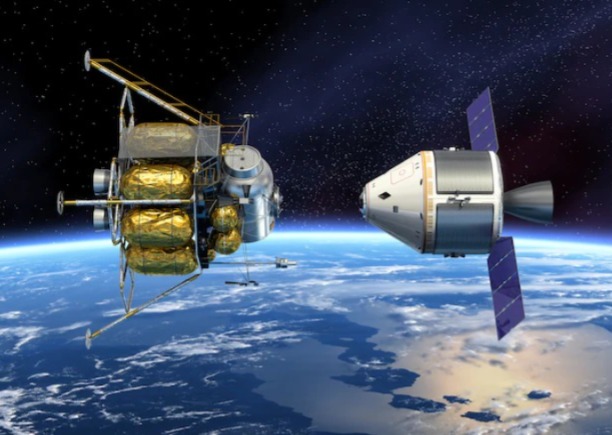
As the year 2024 draws to a close, the Indian Space Research Organisation (ISRO) is poised to make history with its ambitious SpaDeX mission, a critical step towards India’s goal of establishing its own space station, the Bharatiya Antriksh Station (BAS). This mission marks a significant milestone in India’s space exploration journey, positioning the country among the elite group of nations capable of performing complex space docking maneuvers.
The SpaDeX Mission: A Detailed Overview
The SpaDeX mission, short for Space Docking Experiment, involves the launch of two small satellites, SDX01 (Chaser) and SDX02 (Target), each weighing 220 kilograms. These satellites were deployed into a low Earth orbit of approximately 475 kilometers using the PSLV-C60 rocket from the Satish Dhawan Space Centre in Sriharikota, Andhra Pradesh. The mission’s primary objective is to demonstrate the technology required for rendezvous, docking, and undocking of these spacecraft.
Objectives and Significance
The SpaDeX mission is multifaceted, with several key objectives:
• Docking and Undocking: The mission aims to demonstrate the precise and intricate process of docking and undocking the two satellites. This capability is essential for future space missions, including lunar exploration and the establishment of India’s space station.
• Power Transfer: The mission will also demonstrate the transfer of electric power between the docked spacecraft, a crucial aspect for in-space robotics and other future applications.
• Composite Spacecraft Control: ISRO will test the remote control of the composite spacecraft, both from space and from mission control, ensuring seamless operations.
• Payload Operations: After undocking, the satellites will operate their respective payloads, which include a range of innovative experiments.
Implications for Future Missions
The success of the SpaDeX mission is pivotal for India’s future space endeavors. It will enable India to join the exclusive club of countries that have mastered the art of space docking, currently comprising the United States, Russia, and China. This technology is vital for the construction and operation of the Bharatiya Antriksh Station, which is scheduled to be fully operational by 2035. The BAS will be India’s first modular space station, designed to conduct advanced scientific research in areas such as life sciences and medicine.
Additional Experiments and Innovations
In addition to the primary docking experiment, the PSLV Orbital Experimental Module (POEM-4) will host 24 innovative payloads. These include experiments developed by ISRO and various universities and startups, such as a “walking robotic arm” and a “Debris Capture Robotic Manipulator” to test space junk cleanup. The POEM-4 platform will also facilitate microgravity experiments for an extended duration, providing valuable opportunities for the scientific community.
ate the capturing of tethered debris.
Sorry, there was a YouTube error.