


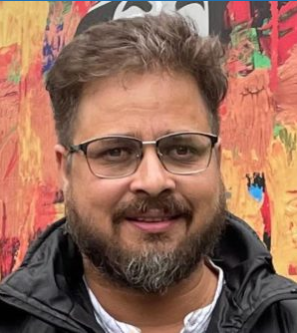
“Goa cannot become a perpetual zone of unrest, where every policy turns into a confrontation. That hurts tourism, investment, and civic calm. But it cannot return to a state where people are silenced or dismissed. The balance is in democratic maturity: the state must act decisively but transparently; citizens must hold firm but also offer solutions; politics must mediate rather than exploit.”
Goa is known for its festivals, its beaches, its relaxed pace of life. But in recent months, it is become known for something else: protest. From the halls of IIT to the corridors of Unity Mall, from the streets of Assonora to the drama around Rama KanKonkar’s assault — and now taxi operators raging over a parking fee hike at Mopa Airport — the state is witnessing a cascade of public anger. And with elections looming, this is no random outburst. It’s a flashing red warning.
The latest flashpoint is Mopa. Taxi operators, one of the critical lifelines of airport connectivity, took to the entrance demanding a rollback of sudden parking-fee increases. They argue this hike gnaws at their meagre margins and pushes passengers away. This is not just about money; it’s about fairness — about the social compact between service providers and the state. When authorities impose costs without prior consultation, they push stakeholders into confrontation. That protest at Mopa is only the latest in a pattern, but it is a telling one.
Because if we take a bird’s-eye view, these protests are not isolated. The IIT kerfuffle, the Unity Mall dispute, the Rama KanKonkar case, the market tensions in Assonora — all these point toward one thing: a populace fed up with decisions that seem top-down, opaque, and arbitrary. When citizens lose faith in the process — in dialogue, fairness, discourse — they resort to the streets.
The timing is also portentous. Elections are drawing close. In a politically aware state like Goa, the electorate is watching closely. Each protest becomes a live scoreboard: How many people turned up? Did the administration respond? Whose side is the government on — the powerful or the common? The protests are not happening in a vacuum; they are speaking to a broader narrative of accountability, transparency, and respect.
In the past, unpopular decisions might have gone unchallenged. Today, thanks to social media, a sharper civil society, and a more vocal youth, grievances are aired swiftly, virally, and loudly. The government must see this not as a nuisance, but as feedback — albeit harsh — that citizens will not tolerate being sidelined.
But responding with police strongarm tactics or dismissive statements will only fuel further resentment. The smarter, safer route is to act, to listen, to engage. In the Mopa case, for instance, airport authorities and taxi associations must sit together quickly, review the hike, and find a middle path. Let there be a phased implementation, concessions, or discounts during low hours. Bring in a transparent methodology for parking fee calculation — clear formulas, published documents, stakeholder inputs.
Equally in IIT or in mall disputes, the administration must not habitually treat protests as law and order problems. These are signals that governance is failing in negotiation, in communication, in legitimacy. Stop issuing diktats at midnight. Open public hearings. Bring citizens into the loop. Not as a token gesture, but as genuine collaborators.
For political parties, this protest season is a gold mine — but also a minefield. They can choose to co-opt these movements, making them campaign slogans, or they can commit to real reform. The risk of cynicism is real. If every leader uses protests only to polarize and win votes, the deeper ailments of governance remain unhealed.
Goa cannot become a perpetual zone of unrest, where every policy turns into a confrontation. That hurts tourism, investment, and civic calm. But it cannot return to a state where people are silenced or dismissed. The balance is in democratic maturity: the state must act decisively but transparently; citizens must hold firm but also offer solutions; politics must mediate rather than exploit.
In the end, this torrent of protests may actually strengthen Goa — if the lessons are learned. Elections will come. Promises will be made. But real mandate will not come only from votes — it will come from trust earned, from institutions respected, from the public feeling it has a say. The protests are not just symptoms. They are a test: Can Goa’s leaders listen and adjust? Or will they remain tone-deaf until the election day?
Let Goa rise above mere theatrics. Let protests not be the whole story. Let governance, open dialogues, and mutual respect be the narrative that defines the next chapter.
