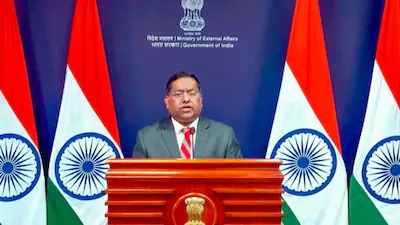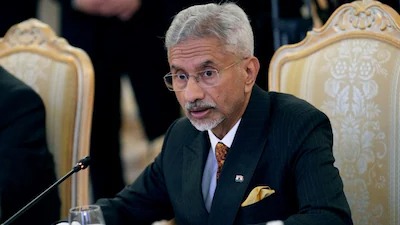
New Delhi: External Affairs Minister S Jaishankar called for urgent reforms in the United Nations, stating that the organisation continues to mirror the world order of 1945 rather than the realities of 2025. Speaking at the United Nations Troop Contributing Countries’ (UNTCC) Chiefs’ Conclave in New Delhi, he stressed that global challenges such as pandemics, terrorism, climate change, and economic instability are deeply interconnected and require a more inclusive and cooperative global response.
Jaishankar highlighted that the UN, while central to fostering multilateral action, must evolve to remain effective. He urged member nations to look beyond geopolitical rivalries and focus on building shared solutions for global peace and stability. “Our responses must be rooted in cooperation and collective responsibility,” he said, noting that the United Nations should serve as the natural platform for such efforts.
Reflecting on his participation at the 80th UN General Assembly in New York, Jaishankar pointed out that the structure and decision-making of the UN still reflect post-World War II realities. He emphasized that the organisation’s membership has quadrupled over the decades, and institutions that fail to adapt risk not only irrelevance but also diminishing credibility. He underscored that for the UN to remain effective, it must become more inclusive, democratic, and representative of the modern world, particularly by amplifying the voices of developing nations and the Global South.
The minister underlined that the credibility and legitimacy of the UN depend on its ability to reflect the aspirations of today’s diverse and rapidly changing global community.
The three-day UNTCC Chiefs’ Conclave, hosted by the Indian Army, began on October 14 and brought together senior military leaders from 32 nations. The forum serves as a vital platform to deliberate on operational challenges, evolving threats, and the future of UN peacekeeping. Discussions also focused on improving coordination, enhancing inclusivity in decision-making, and leveraging technology and training to make peacekeeping operations more effective.