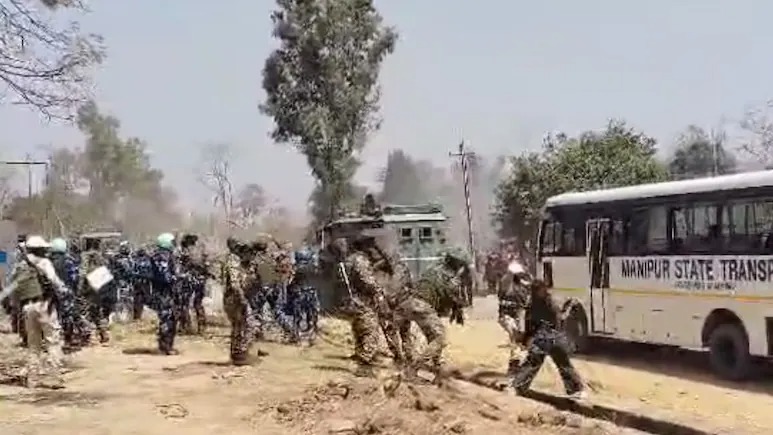
New Delhi: The fragile peace in Manipur was severely tested on the first day of the Centre’s initiative to ensure free movement across the state. Kuki protesters clashed with security forces, underscoring the deep-seated tensions between the Kuki tribes and the government. The Kuki community has been adamant in its demand for a separate administration, refusing to allow unrestricted travel until their aspirations are met. This ongoing conflict has claimed over 250 lives and displaced nearly 50,000 people since May 2023.
The Centre’s decision to remove all road blockades in Manipur, currently under President’s Rule following the resignation of Chief Minister N Biren Singh, was met with resistance from Kuki tribes. Protests erupted in several Kuki-dominated areas, leading to confrontations with security forces. The conflict involves the Meitei community and over a dozen Kuki tribes, primarily centered around issues of land rights and political representation.
Kuki leaders and militant groups have consistently demanded a separate administration before allowing free movement across the state. This demand has evolved from seeking an autonomous council to a full-fledged Union Territory with an assembly, driven by the ongoing ethnic clashes. The World Kuki-Zo Intellectual Council has highlighted that the demand for a separate state dates back to 1946-47, underscoring the historical depth of this aspiration.
The Meitei community has questioned why internally displaced Kukis are preventing Meiteis from returning home, suggesting that dialogue could proceed alongside the return of displaced individuals. However, Kuki groups point to the violence that began in May 2023 as justification for escalating their demands. The situation remains volatile, with both sides entrenched in their positions, complicating efforts to restore peace in the region.
Sorry, there was a YouTube error.