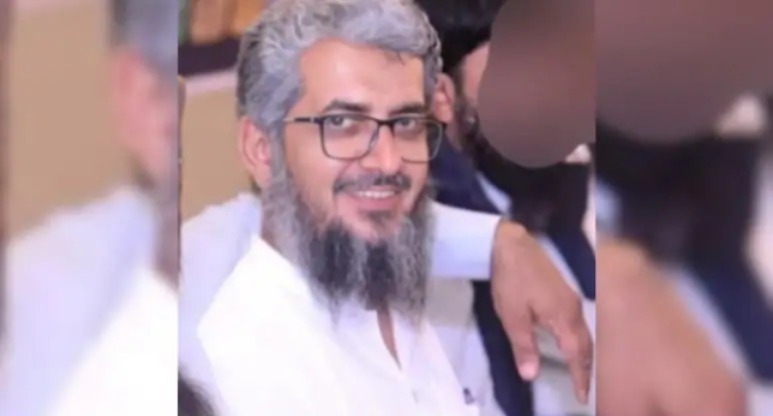
NEW DELHI: In a major development in the ongoing fight against cross-border terrorism, Abu Saifullah, a top terrorist of Lashkar-e-Taiba and the mastermind behind several deadly attacks in India, has been shot dead by unidentified assailants in Sindh, Pakistan.
Saifullah, whose real name was Rajullah Nizamani, had long been on Indian security agencies’ radar. He was believed to have played a pivotal role in orchestrating multiple terror operations, including the 2006 attack on the Rashtriya Swayamsevak Sangh (RSS) headquarters in Nagpur, the 2005 Indian Institute of Science (IISc) attack in Bengaluru, and the 2001 assault on a CRPF camp in Rampur.
Terror Operations and Nepal Link
According to intelligence sources, Saifullah had been operating a Lashkar module from Nepal, where he was involved in financing, recruitment, and logistics for cross-border terrorism. He was instrumental in facilitating terrorist infiltration into India, as well as raising and routing funds for terror networks.
He was a close associate of Azam Cheema, Lashkar’s operational commander and one of the primary architects of the 2008 Mumbai terror attacks. Saifullah was reportedly active in furthering Lashkar’s agenda in the region and was considered a high-value operative.
Death Follows India’s Counter-Terror Strikes
His killing comes days after India’s massive counter-terror offensive, Operation Sindoor, which began on May 7. The Indian Army, Navy, and Air Force conducted coordinated strikes on terror camps in Pakistan and Pakistan-Occupied Kashmir (PoK) in response to the April 22 terror attack in Pahalgam, Kashmir.
India claimed that over 100 terrorists were neutralised during the strikes. Among the high-profile militants killed in Operation Sindoor were:
• Mudassar Khadian Khas alias Abu Jundal
• Hafiz Muhammed Jameel, brother-in-law of Jaish-e-Mohammed chief Maulana Masood Azhar
• Mohammad Yusuf Azhar
• Khalid alias Abu Akasha
• Mohammad Hassan Khan
Following India’s operations, Pakistan launched retaliatory missile and drone attacks on Indian territory, targeting both civilian and military installations. India responded swiftly, striking three major airfields in Pakistan, further escalating tensions before a ceasefire was reached.
Significance of Saifullah’s Death
While it remains unclear who was behind Saifullah’s killing, sources suggest that internal rivalry, fear of exposure, or fallout from India’s recent operations could be possible motives. His death is being seen as a major blow to Lashkar-e-Taiba’s regional operations and a symbolic victory for India in its counter-terrorism efforts.
Security agencies are closely monitoring the situation, and further developments are expected as intelligence inputs continue to emerge.
4o
Sorry, there was a YouTube error.