New Delhi: India has called for unified global action to prevent terrorist groups from using Afghan territory as a safe haven, stressing that entities such as Lashkar-e-Tayyiba (LeT), Jaish-e-Mohammed (JeM), and their sponsors must no longer be allowed to exploit the situation in Afghanistan.
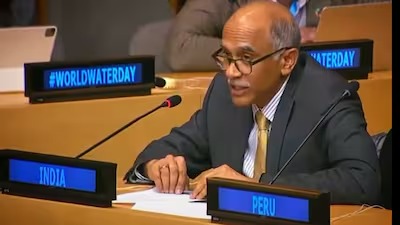
Speaking at the UN Security Council’s briefing on Afghanistan, India’s Permanent Representative to the UN, Ambassador Harish Parvathaneni, reaffirmed New Delhi’s commitment to promoting peace, stability, and development in the country.
“The international community must coordinate efforts to ensure that entities and individuals designated by the UN Security Council — including ISIL, Al Qaeda, Lashkar-e-Tayyiba, Jaish-e-Mohammed, and those who facilitate their operations — no longer exploit Afghan territory for terrorist activities,” Parvathaneni said, indirectly referring to Pakistan-based groups.
Parvathaneni welcomed Afghanistan’s condemnation of the April 22 Pahalgam terror attack in Jammu & Kashmir and reiterated India’s focus on providing humanitarian assistance and capacity-building programmes for the Afghan people.
“India believes in the importance of international and regional consensus on key issues concerning Afghanistan and actively engages with all stakeholders to promote peace and stability,” he said.
He reaffirmed India’s support for the United Nations Assistance Mission in Afghanistan (UNAMA), thanking Special Representative of the Secretary-General (SRSG) Roza Otunbayeva for her cooperation and briefing.
Highlighting India’s quick response to the devastating 6.0 magnitude earthquake that struck southeastern Afghanistan on September 1, killing over 2,000 people, Parvathaneni said India was among the first nations to send relief.
“India immediately delivered 1,000 family tents and 15 tonnes of food supplies, followed by 21 tonnes of additional relief materials, including medicines, hygiene kits, blankets, and generators,” he noted.
He also detailed India’s ongoing development contributions, including partnerships with the UN Office on Drugs and Crime to provide 84 MT of assistance and medicines, support for drug rehabilitation programmes (particularly for women), and scholarships for Afghan students. Since 2023, India has provided scholarships to 2,000 Afghan students, including nearly 600 girls.
Concluding his remarks, Parvathaneni urged the global community to adopt a more adaptive strategy towards Afghanistan.
“Afghanistan needs a fresh approach with new policy instruments to support its people, who are in dire need. A ‘business as usual’ approach will only maintain the status quo, which is neither good for Afghanistan nor aligned with the expectations of the international community,” he said.
Sorry, there was a YouTube error.