Team Goemkarponn
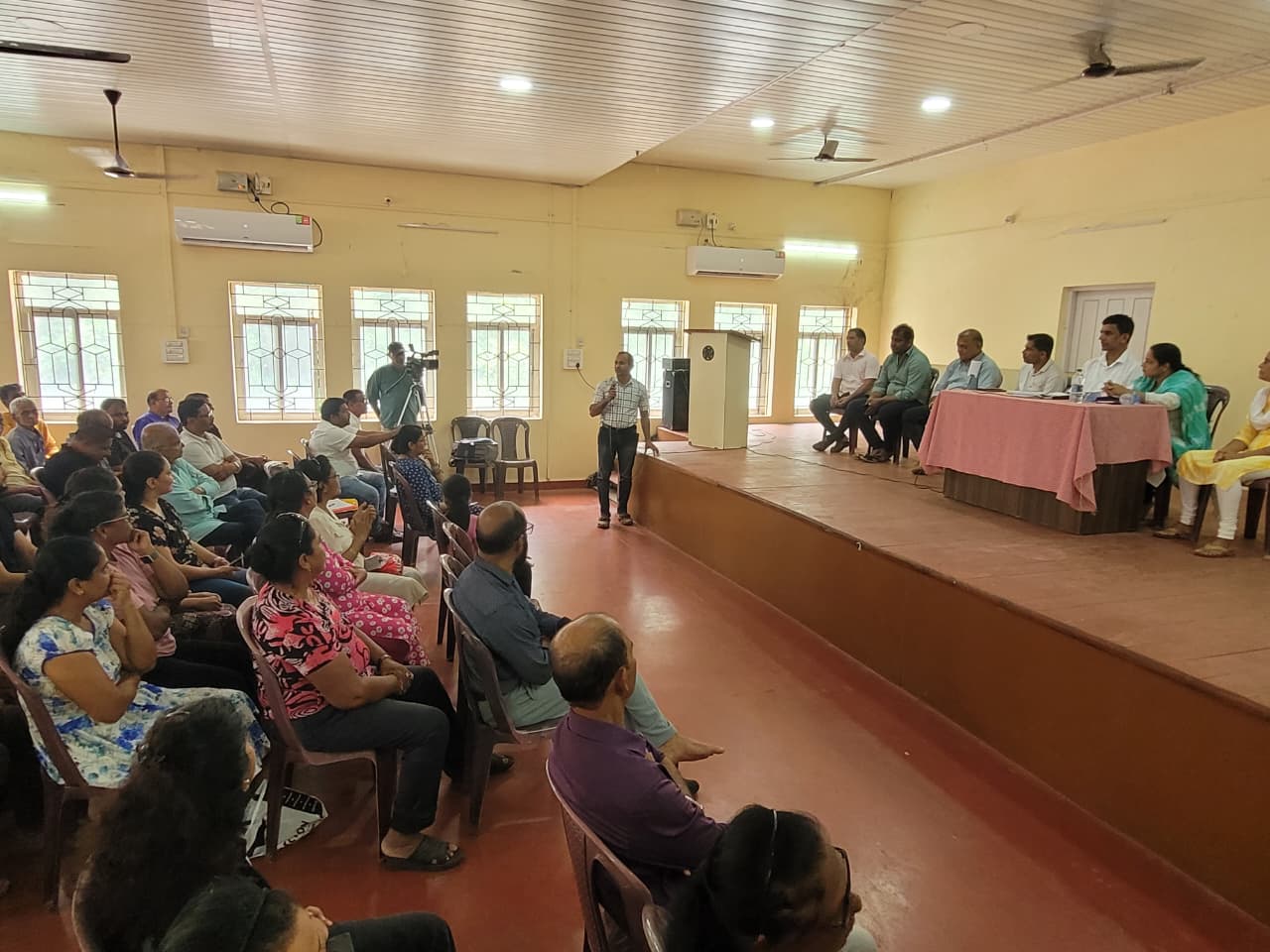
Canacona: In a decisive and unified stand, the Loliem-Polem Gram Sabha on Sunday categorically rejected all 13 developmental proposals, including the government-backed Film City project on Bhagwati plateau, earlier cleared by the Loliem-Polem Communidade. The Gram Sabha resolutions clearly stated that no non-traditional use of the village plateaus would be permitted.
The meeting saw over 200 villagers participating in what many called a critical and symbolic session to protect their village’s ecological and cultural integrity. The resolutions, proposed by Dattaprasad Prabhugaonkar and seconded by Prashant Pagi, were passed unanimously. The Gram Sabha authorized the Panchayat body to formally notify all project proponents and higher authorities—including the Chief Minister, Ministry of Environment & Climate Change, TCP, and South Goa Communidade Administrator—about the rejection, and to pursue legal remedies if necessary.
The Gram Sabha also called upon all 13 project proponents—including those proposing fruit processing units, a Sainik school, solar plant, cricket stadium, and wayside amenities—to withdraw their proposals from the Communidade. These were deemed unacceptable for being incompatible with traditional land use patterns.
Environmentalists termed this as the continuation of a long struggle dating back to 2005 when the village opposed four large tourism projects. The movement had gained renewed momentum with the IIT Goa protest in 2016 and now with the Film City proposal, allegedly linked to political figures.
“The villagers are once again standing strong to defend their sacred plateaus,” said Prabhugaonkar, while activist Prashant Pagi added that over 1,100 villagers had already submitted letters of opposition ahead of the Gram Sabha.
The meeting, chaired by Sarpanch Nisha Chari and attended by six panch members including Dy. Sarpanch Ashutosh Bandekar, saw active participation from environmental crusaders Shailesh Pagi and Om Prabhugaonkar. Ex-sarpanchs Ajay Lolienkar and Pratiza Bandekar were also present, although the Maxem panch was notably absent.
As per Denis Fernandes, the clarity and preparedness of villagers made the outcome inevitable. “This battle is won, but the war is not yet over,” he said, underscoring the community’s determination to safeguard their land.