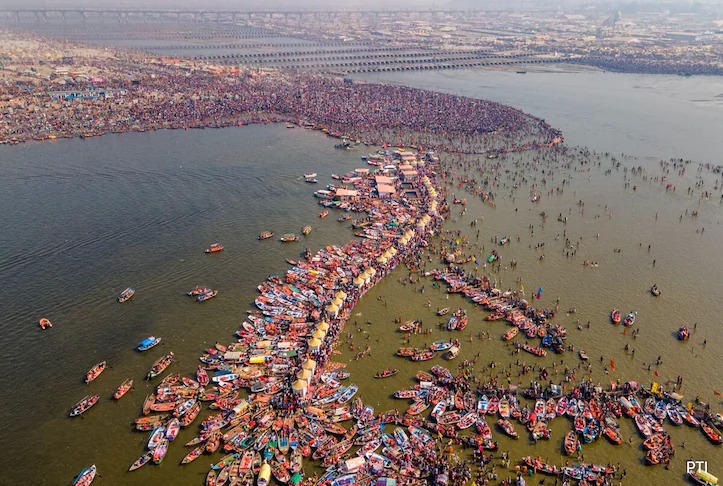
New Delhi: As the sun rises over Prayagraj, the city is abuzz with anticipation. Today marks the culmination of the Maha Kumbh 2025, a 45-day spectacle that has drawn a record-breaking 63.36 crore devotees to the sacred Triveni Sangam. This confluence of the Ganga, Yamuna, and mythical Saraswati rivers has become a symbol of spiritual rejuvenation and cultural harmony, bringing together people from all walks of life.
The final dip on Maha Shivratri is not just a religious ritual but a testament to the event’s profound impact on society. It is a day when millions gather to cleanse their souls and seek divine blessings. The significance of this event extends beyond its religious importance, as it fosters a sense of community and shared values among its participants.
The Uttar Pradesh government has made extensive arrangements to ensure a smooth and safe experience for the devotees. These include efficient crowd management, enhanced sanitation facilities, and adequate medical services. The event has also seen elaborate security measures, with thousands of police personnel and advanced surveillance systems in place.
Despite these efforts, the Maha Kumbh faced challenges, including a tragic stampede on Mauni Amavasya that resulted in loss of life and injuries. Additionally, there were controversies surrounding the water quality at the Sangam, with some reports suggesting the presence of fecal coliform bacteria. Chief Minister Yogi Adityanath and Prime Minister Modi were at the forefront of addressing these concerns, emphasizing the importance of maintaining the sanctity of the event.
The Maha Kumbh is deeply rooted in Hindu mythology, mentioned in the ancient Rig Veda. It symbolizes the quest for immortality and spiritual enlightenment, as devotees believe that bathing in the sacred rivers under auspicious constellations can cleanse them of their sins. This belief has made the Maha Kumbh a cornerstone of Indian cultural heritage, attracting pilgrims from across the globe.
Sorry, there was a YouTube error.