Team Goemkarponn
MARGAO: Justice continues to elude thousands in Margao, where an alarming number of cases remain unresolved for years, eroding public faith in the judicial system.
As of January 31, 2025, Margao’s trial courts recorded 9,079 pending matters — 5,276 civil and 3,803 criminal cases — according to data from the court’s official website.
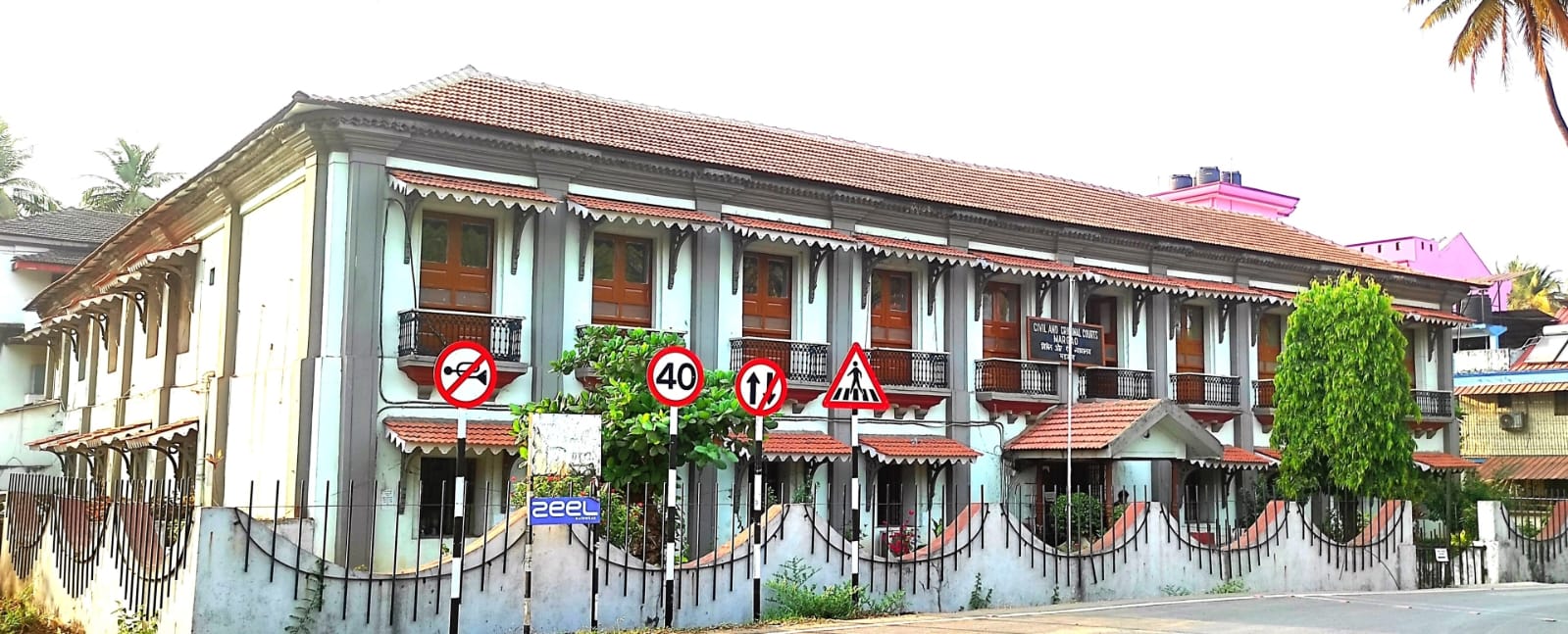
Margao currently houses several courts under the Senior Division — including the Chief Judicial Magistrate (A-Court) and the First, Second, and Third Additional Courts — along with six Junior Division Courts (C through G). However, nearly half of these courts remain non-functional due to staff shortages and unfilled judicial vacancies.
Advocate Vidatha Rajesh Dessai voiced concern that mounting pendency has turned justice into a distant hope for many citizens. “People approach the courts with faith and expectations, but years of adjournments and delays crush that trust. Some even die before their cases are decided,” he said.
He suggested that separating family, civil, and criminal jurisdictions could streamline proceedings, while quicker matters should be taken up on Saturdays with mutual consent. While initiatives like Lok Adalats and mediation centres have eased the load, Dessai lamented that “ego and rigid attitudes” often prolong disputes unnecessarily.
Acknowledging the strain on judicial officers, he urged collaboration among advocates, judges, and staff to accelerate case disposal. “The burden is immense on everyone. Justice must not only be fair — it must be timely and within reach of all,” he added.
Echoing similar concerns, South Goa Advocates Association (SGAA) President Adv Prasad Naik confirmed that only three Senior Division and one Junior Division Court are currently functioning in Margao. “With 50% of the courts lying vacant, the delay in justice delivery is severe,” he said.
Naik noted that while the High Court of Bombay at Goa has appointed two new Junior Division Judges for Margao, they are still under training — meaning relief may not come immediately. “Due to the shortage of judges, even after arguments conclude, courts adjourn cases for orders. Witnesses travel long distances only to be told to return as their matters can’t be heard,” he explained.
Execution proceedings — meant to enforce judgments — are also pending for years, depriving decree holders of justice already granted, Naik added.
He appealed for temporary assignment of additional judges to fill vacant posts until new appointments take charge.