Team Goemkarponn
VASCO: In a twist straight out of a civic plot twist, the Mormugao Municipal Council (MMC) is flipping the script on garbage management — by getting rid of the garbage bins themselves. Yes, you read that right. The very symbols of cleanliness are now being blamed for the mess, and the MMC believes that the road to a cleaner Vasco might just begin with dumping the dump bins.
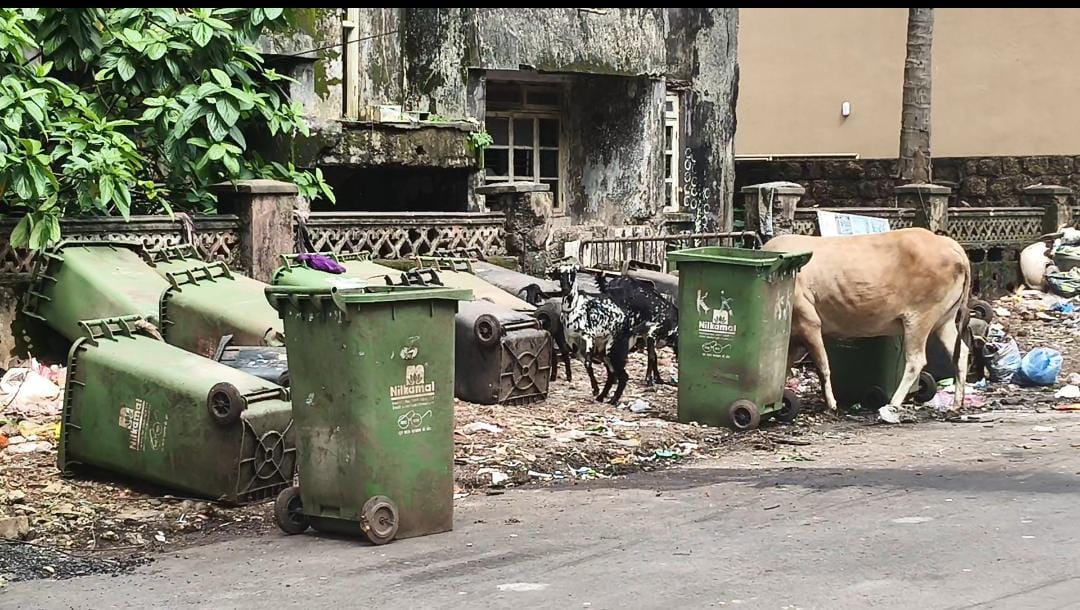
In a bold and unusual move to tackle the persistent garbage menace in the city, the MMC is seriously considering doing away with garbage bins entirely from its jurisdiction. The surprising proposal — which has already undergone a trial in New Vaddem — stems from a growing belief among civic officials that the very presence of bins is inadvertently encouraging indiscriminate dumping.
MMC Chairperson Girish Borker, known for his unconventional ideas, said the inspiration came during a recent council study tour to Bengaluru. “We have tried several methods to deter people from dumping garbage, but the problem persists. Despite CCTV monitoring and heavy fines — especially for caterers — we still find people dumping garbage on roadsides after dark,” Borker said.
He added that the misuse of garbage cages had also compounded the issue. “We had installed cages to help garbage contractors sort waste, but they soon became dark spots misused by the public. After we removed them, those spots were beautified — but a similar problem is now happening with garbage bins,” he explained.
According to Borker, the bins themselves are creating dumping grounds. “Garbage collectors place these large bins in secluded corners, and people assume it’s a dumping site. That’s how new garbage hotspots are created. We even tried keeping the bins upside down to indicate they shouldn’t be used, but people still dumped trash nearby,” he said.
The MMC’s visit to Bengaluru proved to be an eye-opener. “There, we saw garbage collection vehicles with the Swachh Bharat jingle making rounds in each locality. Residents would come out and dump waste directly into the vehicle. It reduced manpower requirements, raised daily awareness, and was monitored in real-time through a mobile app,” Borker said.
While MMC is considering developing a similar app system, Borker acknowledged that Vasco’s geography and challenges are different ,which mandated trial runs. “We conducted a trial in the densely populated New Vaddem area by assigning a vehicle only to those three to four wards. After involving local councillors and engineers, we saw a tremendous response. Residents were cooperative and appreciated the system,” he said.
To expand this initiative across Vasco, MMC is seeking additional vehicles. “We’ve received help from GSL and Minister Mauvin Godinho, and more vehicles are being procured. Once the new fleet of 10 vehicles arrives, we plan to implement this across all 25 wards. The ultimate goal is to remove the bins entirely and beautify the locations that had turned into dark garbage spots,” Borker explained.
He also highlighted the ongoing efforts to ensure scientific disposal. “Garbage is collected daily and sent to the Sada dumping and treatment plant. But our success depends heavily on public cooperation. Unfortunately, some residents won’t even pay ₹2 a day or ₹60 a month for doorstep collection,” he said.
With the MMC steering towards a no-bin model and technology-driven monitoring, the council is hoping this radical approach will lead to a cleaner, more responsible Vasco — one without garbage bins, and without garbage.