Team Goemkarponn
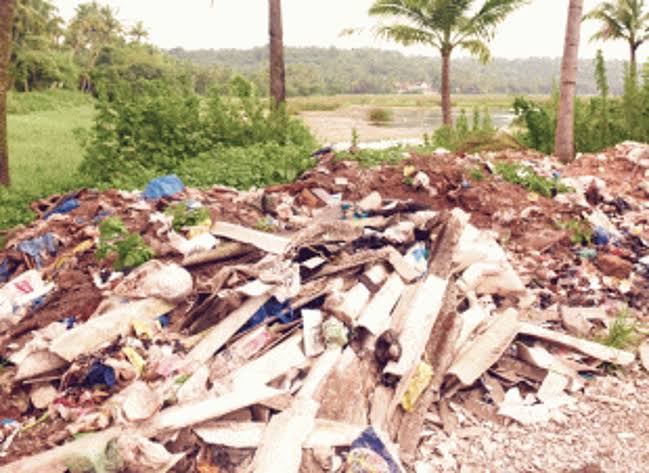
VASCO:The Comunidade of Mormugao has moved the High Court of Bombay at Goa, accusing several government agencies of turning a blind eye to the illegal dumping of construction debris and mud on its agricultural land in Vasco.
In a petition filed through its attorney Antonio Maximiano Pereira, the Comunidade has alleged that the South Central Railway and Rail Vikas Nigam Limited (RVNL) carried out large-scale dumping and landfilling in paddy fields, causing serious environmental damage and loss of cultivable land.
The petition names as respondents the South Central Railway, RVNL, Town and Country Planning Department, Mormugao Planning and Development Authority (MPDA), Goa State Pollution Control Board, Mormugao Municipal Council, the South Goa Collector and Deputy Collector, and the State of Goa, among others.
The Comunidade has sought High Court directions to clear the dumped debris, restore the land, and enforce an earlier court order dated July 17, 2023, which had called for stringent action against illegal dumping and restoration of affected sites.
According to the plea, despite multiple complaints and inspection reports confirming unauthorized dumping and encroachment, no effective steps were taken by the concerned authorities. “Repeated reminders have yielded no results, and the violators continue their activities unchecked,” the petition stated.
The Comunidade has asked the court to issue mandamus orders compelling authorities to act against those responsible, investigate the violations, and ensure that railway double-tracking work does not lead to further damage. It has also sought penal action under the Construction and Demolition Waste Management Rules, 2016, and the Solid Waste Management Rules, 2016.
In addition, the Comunidade has challenged an MPDA order issued on October 30, 2023, which directed it to carry out restoration work instead of penalizing the offenders. Calling the directive “arbitrary and unjust,” the Comunidade argued that the order lets the actual violators “escape responsibility” while burdening the landowner.