Team Goemkarponn
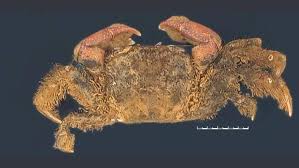
PANAJI: Scientists have identified a previously unknown species of marine crab along Goa’s coastline, highlighting the rich biodiversity of the State’s mangrove forests. Named Chhapgarus ngankeeae, the species was discovered by Sameer Kumar Pati from the Zoological Survey of India.
The discovery traces back to the muddy backwaters of the Galgibaga River in Goa, where the primary reference specimen, or holotype, was collected. Measuring just 1.6 cm, the small crab inhabits intertidal mangrove habitats, which are commonly found along Goa’s coast.
Interestingly, the species was recognized after Pati revisited older crab specimens preserved in collections from Goa, Karnataka, and Maharashtra. Previously thought to belong to other known species, microscopic examination revealed clear anatomical differences, confirming it as a new species. Experts pointed out that while the crab may appear similar to others at first glance, it possesses distinctive features, particularly on its underside, including a narrower abdomen and uniquely shaped reproductive organs — considered a “scientific fingerprint” for identification.
The species has been named in honor of the late marine biologist Ngan Kee Ng, acknowledging her contributions to crab research.
Marine scientists emphasize that the discovery underscores the ecological significance of Goa’s mangroves. These habitats support key species like mangrove crabs, which help maintain coastal health by recycling nutrients and sustaining the food web.
Researchers also note that mangrove ecosystems along India’s west coast remain largely unexplored. The finding of Chhapgarus ngankeeae serves as a reminder of the hidden biodiversity in these regions and the need for further scientific studies. Future research, including DNA analysis, is expected to shed more light on the evolution and diversity of these coastal species.