New Delhi: Finance Minister Nirmala Sitharaman has said that the much-debated “popcorn example” highlights why a reclassification of goods and services under the Goods and Services Tax (GST) regime was necessary.
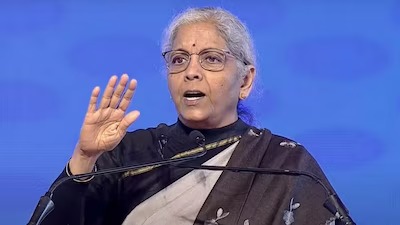
In an exclusive interview with CNN-News18, Sitharaman said that the GST Council’s recent decision to move to a simplified two-slab structure — scrapping the 12% and 28% rates — was aimed at addressing long-standing classification issues that had led to litigation and revenue losses for states.
“Even as we were talking about GST simplification, we had to address classification. I, without hesitation, will bring the example of popcorn. Why hesitation? Because I was pilloried for it. But that tells you the problem of classification,” the finance minister said.
She explained that in the pre-GST era, each state defined its own tax rates, creating confusion and arbitrage opportunities. “In the case of popcorn, litigation arose because classification was different. People started showing higher-taxed sugary or chocolate-coated popcorn as salted popcorn, which attracted a much lower tax. States were losing revenue because of such misclassification,” Sitharaman said.
The minister added that the new exercise aimed to regroup all goods and services based on their impact on households, farmers, and the middle class, rather than relying solely on their codes or names. “Daily-use items, which are essential for poor and middle-class families, could not continue to be taxed in a way that created confusion or burdened households. This reform was about aligning GST with the aspirations of a growing India transitioning towards a Viksit Bharat,” she said.
Sitharaman also underlined that 99% of goods and services under GST now fall under 0%, 5%, or 18% rates, with only 1% remaining in the highest category for demerit or “sin” goods. “We have cleansed the system of anomalies, doubts, duplications, and interpretative issues,” she said.