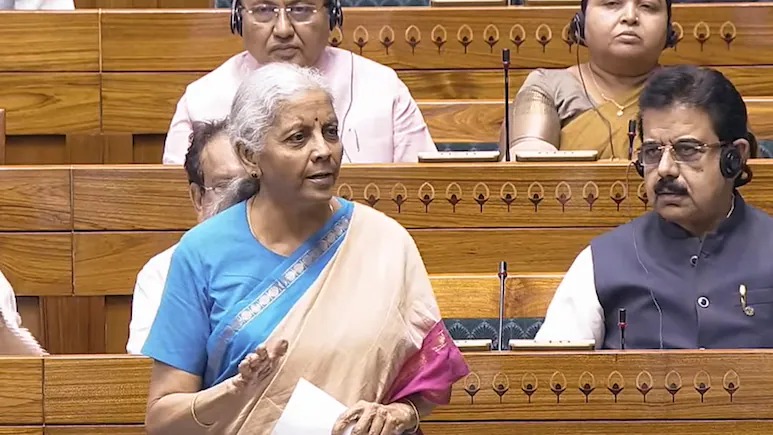
New Delhi: Union Finance Minister Nirmala Sitharaman is set to introduce two significant pieces of legislation in the Lok Sabha, including the Finance Bill, 2026 and the Corporate Laws (Amendment) Bill, 2026.
The Finance Bill, 2026 is designed to implement the financial proposals announced by the central government for the 2026 to 2027 fiscal year. The minister will move the bill for consideration and seek its passage in the House, marking an important step in translating the government’s budgetary announcements into law and shaping the country’s economic policy for the coming year.
Alongside the Finance Bill, the government will also introduce the Corporate Laws (Amendment) Bill, 2026, which proposes changes to major corporate legislation including the Limited Liability Partnership Act, 2008 and the Companies Act, 2013. These laws regulate the incorporation, governance, disclosure requirements and dissolution of companies, while also providing a flexible framework for partnerships with limited liability protection.
The proposed amendments are aimed at strengthening the regulatory structure governing businesses and ensuring that corporate laws remain aligned with evolving economic and commercial realities.
In parallel with these legislative efforts, the government has also moved forward with proposed reforms to the Insolvency and Bankruptcy Code. Earlier this month, the Union Cabinet of India approved amendments to the insolvency framework, paving the way for the introduction of the IBC Amendment Bill during the current parliamentary session.
The proposed changes are based on recommendations made by a parliamentary select committee led by Baijayant Panda. The committee submitted its report in December 2025 after reviewing the existing bankruptcy system and identifying areas that require reform.
Among its key recommendations are stricter timelines for resolving insolvency cases to reduce delays that often slow down corporate resolution processes. The panel also suggested granting greater authority to the Committee of Creditors, enabling lenders to take faster and more decisive action during bankruptcy proceedings.
Additional reforms under consideration include a framework for handling cross border insolvency cases, which would help address situations involving distressed companies with assets and creditors in multiple countries. These measures aim to strengthen India’s insolvency ecosystem and improve the efficiency of the corporate resolution process.