New Delhi:
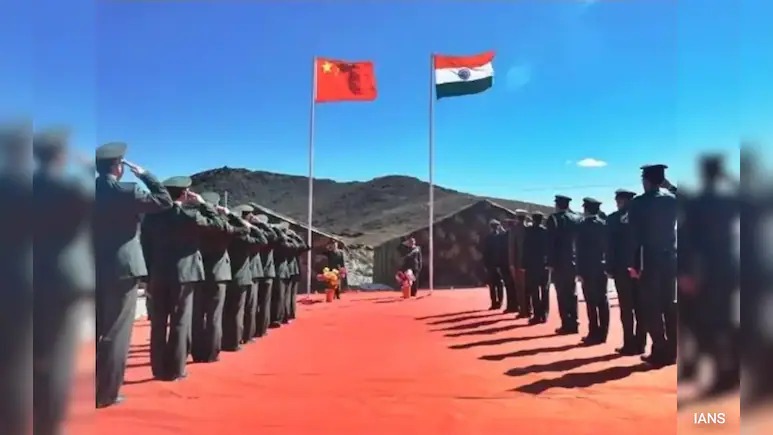
In a notable development, India and China have successfully completed the disengagement of troops from the last two friction points in eastern Ladakh, marking a crucial step towards normalizing their relations. This achievement follows a series of high-level diplomatic engagements, including a meeting between Prime Minister Narendra Modi and Chinese President Xi Jinping on the sidelines of the BRICS Summit in Russia.
The recent disengagement from the Demchok and Depsang areas in eastern Ladakh is a result of an understanding reached on October 21, 2024. This agreement has been hailed as a significant milestone in the efforts to ease tensions along the Line of Actual Control (LAC), which have been a point of contention since the military standoff in 2020.
Prime Minister Modi and President Xi Jinping’s meeting on October 23, 2024, was instrumental in reviving various bilateral dialogue mechanisms. This move signals a clear intention from both sides to normalize their relations and address outstanding issues through diplomatic channels. National Security Advisor Ajit Doval’s recent visit to Beijing for Special Representatives talks with Chinese Foreign Minister Wang Yi further underscored the commitment to resolving the boundary dispute.
Despite the progress, Army Chief Gen Upendra Dwivedi emphasized that the situation along the LAC remains sensitive but stable. Gen Dwivedi highlighted the need for a broader understanding to calm down the situation and restore trust between the two militaries. He noted that while the disengagement is a positive step, there is still a “degree” of standoff that requires careful management.
The Ministry of External Affairs (MEA) has clarified that there is no contradiction between Gen Dwivedi’s remarks and the government’s position on the LAC situation. MEA spokesperson Randhir Jaiswal reiterated that both the Army and the MEA are aligned on the issue, citing the external affairs minister’s clear stance on disengagement and the resumption of patrolling and grazing activities as per longstanding practices.
The disengagement agreement ensures that patrolling will resume to relevant points, and civilians will be allowed to graze in the areas as they have traditionally done. Gen Dwivedi also clarified that there are no permanent buffer zones but rather temporary moratoriums on patrolling in certain areas to avoid violence. To prevent minor frictions from escalating, corps commanders have been empowered to resolve issues related to patrolling and grazing.
Looking ahead, the next meeting of the Special Representatives on the boundary question and talks under the Working Mechanism for Consultation and Coordination (WMCC) framework are expected to guide future actions. The external affairs minister has underscored that the task of de-escalation remains to be addressed, indicating ongoing efforts to fully normalize the situation.
Sorry, there was a YouTube error.