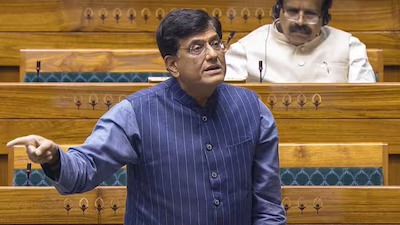
New Delhi: As India gears up for a critical round of trade negotiations with the United States later this month, Commerce Minister Piyush Goyal has made the government’s position crystal clear: India will not negotiate under fear or pressure.
Speaking ahead of the upcoming talks scheduled for August 25, Goyal emphasized that India’s approach is rooted in two key principles — Viksit Bharat (a developed India) and Atmanirbhar Bharat (self-reliant India). These guiding pillars, he said, reflect a confident, assertive India that is no longer willing to accept lopsided trade arrangements.
“India today is a rising trillion-dollar economy. We have emerged as the world’s fifth-largest economy, and the global community acknowledges our economic strength,” Goyal said, asserting that this gives India substantial leverage in trade negotiations, including those with the US.
The US delegation is expected to arrive in New Delhi on August 25 for a scheduled round of bilateral trade talks. While India is seeking a favourable and mutually beneficial deal with one of its largest trading partners, the Indian government has made it clear that it will not operate under deadlines or ultimatums.
“We don’t do deals under pressure. Our focus remains on national interest, not appeasement,” a senior government official stated, reiterating India’s firm stand.
This position comes in contrast to other countries that have previously lobbied Washington to reduce or remove tariffs. India, however, has refused to take that route, emphasizing self-respect and long-term strategic goals over short-term compromises.
India has also resisted pressure from the United States over energy imports. Despite former President Donald Trump’s imposition of a 10% penalty on nations purchasing Russian oil, India continues to buy from the most cost-effective sources.
“We will always prioritise the best interest of our citizens. When it comes to energy, our choices are dictated by global market dynamics and what serves our consumers best,” said a spokesperson from the Ministry of External Affairs.
India’s recent comprehensive trade agreement with the United Kingdom has added to its momentum, demonstrating that New Delhi is capable of negotiating balanced and forward-looking trade pacts with major global economies.
Reports that Trump has offered lower tariffs to countries like Pakistan and Bangladesh have not unsettled Indian policymakers. Officials noted that trade volumes with those countries are marginal and do not impact India’s economic calculus.
Instead, India is focused on protecting its key sectors in the upcoming negotiations. According to sources, the Indian delegation will present clear red lines during talks:
• No concessions in the agriculture sector
• No entry for genetically modified (GM) food
• No harm to India’s labour-intensive industries
• No unrestricted market access for American goods
These positions reflect India’s resolve to safeguard local industries, farmers, and small businesses while resisting external pressures to open up sensitive sectors.
The government is also buoyed by global recognition of Indian talent and manufacturing capabilities. Apple CEO Tim Cook recently lauded Indian manpower as “unmatched,” underscoring India’s increasing relevance in global supply chains and tech manufacturing.
“With this global confidence and robust economic growth, India is in a commanding position,” Goyal said. “We are no longer the India of the past. We negotiate with confidence, and on our own terms.”
As trade talks near, the government’s message to Washington is clear: India is ready to engage, but only on equal footing.
Sorry, there was a YouTube error.