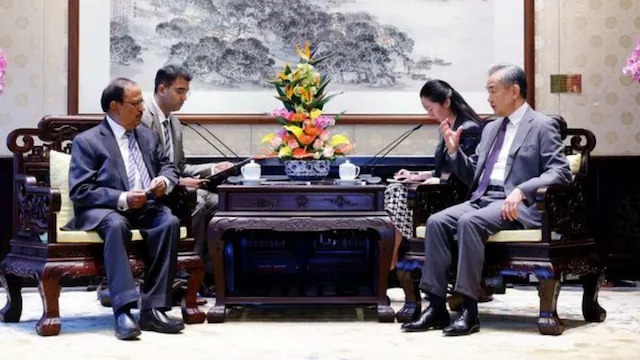
Beijing: In a significant diplomatic engagement, India’s National Security Adviser (NSA) Ajit Doval met Chinese Foreign Minister Wang Yi in Beijing on Monday, where he firmly reiterated the importance of combating terrorism in all its forms to ensure peace and stability across the region.
According to a statement from India’s Ministry of External Affairs (MEA), the meeting between the two top officials focused on reviewing recent developments in India-China bilateral relations and promoting overall cooperation, including enhancing people-to-people exchanges.
“NSA Doval highlighted the necessity of jointly countering terrorism in all its manifestations to maintain regional peace,” the MEA stated, emphasizing India’s consistent position on the issue.
Both Doval and Wang Yi exchanged views on a range of bilateral, regional, and global matters of mutual interest. Doval also extended an invitation to Wang Yi to visit India for the upcoming 24th round of the Special Representative-level talks aimed at resolving outstanding boundary issues and improving strategic ties.
Wang Yi, who is also a member of the Political Bureau of the Communist Party of China (CPC) Central Committee, hosted Doval as part of the 20th Meeting of the Shanghai Cooperation Organisation (SCO) Security Council Secretaries. The ongoing SCO forum has provided India with a platform to highlight cross-border terrorism and seek regional consensus on the issue.
Sources say India is expected to raise the recent terror attack in Pahalgam, Jammu & Kashmir, using it to expose Pakistan’s continued support for terror outfits like Jaish-e-Mohammad (JeM). New Delhi aims to push the SCO to name Pakistan-based terror groups in its declarations—a move likely to face resistance from Islamabad and Beijing.
While India seeks firm commitments against terrorism, diplomatic observers note that China—keen to stabilise ties with India and resume direct flights—may offer only symbolic cooperation. China’s strategic relationship with Pakistan makes it unlikely to endorse any strong language or actions that would directly implicate its close ally.
Doval’s visit, therefore, is seen as a strategic balancing act—confronting Pakistan’s role in regional terrorism while simultaneously engaging China on broader diplomatic and security issues. The outcome of these conversations will likely shape the tone of India’s approach to both neighbours in the coming months.
Sorry, there was a YouTube error.