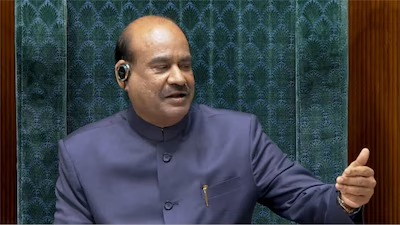
New Delhi: A no confidence motion seeking the removal of Lok Sabha Speaker Om Birla has intensified political tensions in Parliament, with attention now focused on whether the Opposition has the numbers required to push the resolution through the House.
The notice for the motion has been submitted by Opposition leaders, including members of the Indian National Congress, accusing the Speaker of acting in a partisan manner during proceedings of the Lok Sabha. According to reports, the notice carries the signatures of 118 Members of Parliament, indicating support from multiple opposition parties.
Opposition leaders have alleged that the Speaker restricted their opportunities to raise issues during debates and favoured the ruling side during heated exchanges in the ongoing Budget Session.
Under parliamentary rules, the motion must first meet a procedural requirement before it can be discussed. When the notice is taken up in the House, at least 50 MPs must stand in support of it for the resolution to be formally admitted for debate. Once admitted, the House will hold a discussion before voting on the motion.
For the resolution to succeed, it must be passed by a majority of the total strength of the Lok Sabha. With the House having a sanctioned strength of 543 members, at least 272 votes would be needed for the motion to pass and remove the Speaker from office.
However, the current political arithmetic in the Lok Sabha appears to favour the ruling National Democratic Alliance. The alliance is estimated to have around 293 MPs in the House, while the Opposition bloc collectively accounts for about 238 members even if all parties vote together.
Given these numbers, the Opposition would require support from members of the ruling alliance or other parties to reach the required majority, a scenario considered unlikely by many political observers.
Despite the numerical challenge, the motion is seen as politically significant. Opposition parties are expected to use the debate to highlight concerns over parliamentary functioning, while the government side is likely to defend the Speaker’s conduct and adherence to parliamentary rules during the session.