Team Goemkarponn
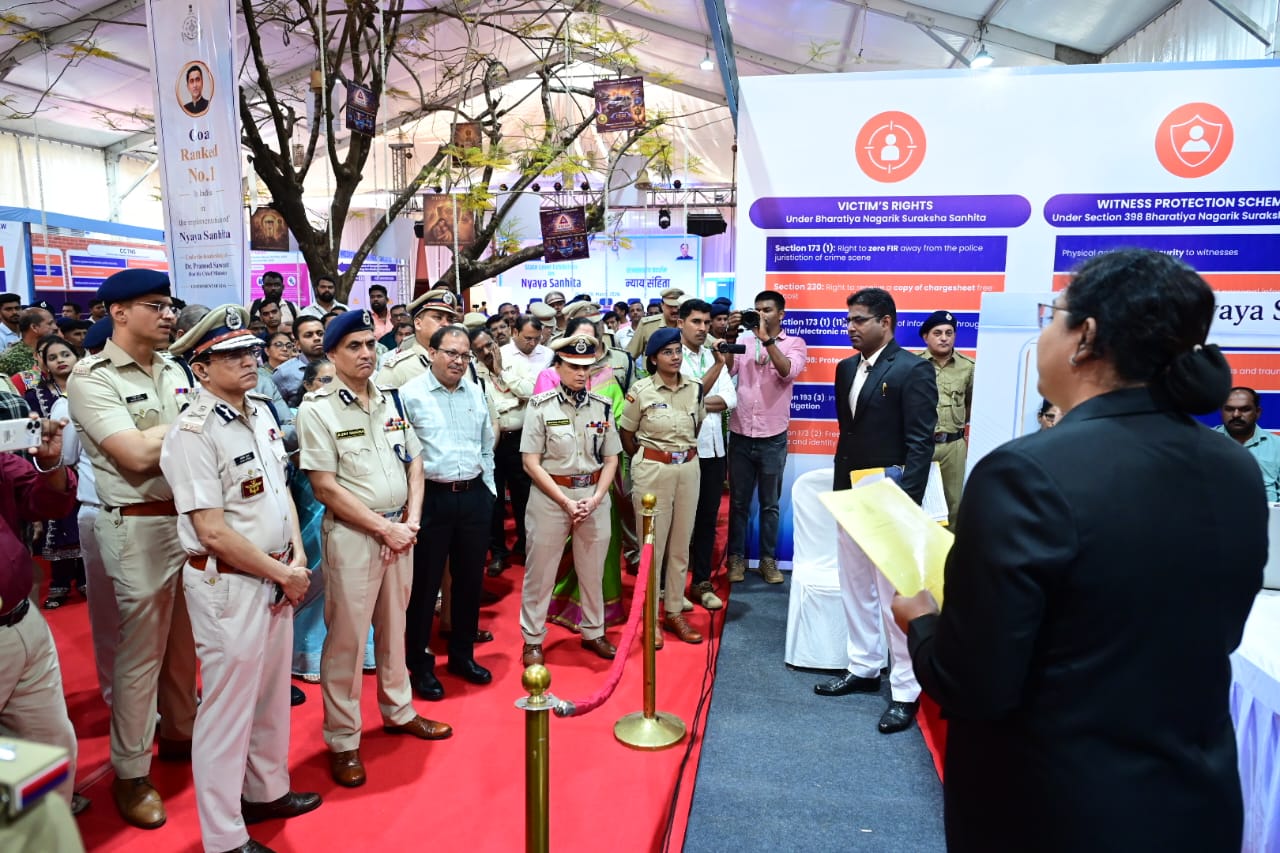
PANAJI: The Nyaya Sanhita Exhibition was inaugurated at Kala Academy, Panaji, by Director General of Police Alok Kumar, IPS, in the presence of senior officers from the judiciary, prosecution, administration and Goa Police. The exhibition highlights India’s transformative criminal justice reforms following the implementation of the Nyaya Sanhita framework from July 1, 2024.
Addressing the gathering, the DGP said the country is moving from a colonial-era “Dand” (punishment) system to a citizen-centric “Nyaya” (justice) framework aimed at faster, transparent and technology-driven delivery of justice.
He noted that Goa has emerged as a national leader in implementing the Nyaya Sanhitas, securing the top position in the country. Goa recorded 100 per cent achievement in administrative reforms and system integration across police, courts, prisons, forensic science and prosecution, along with 92 per cent implementation of ICT applications such as e-Summons, Nyaya Shruti and MedLeaPR. The state has also maintained a conviction rate of around 70 per cent in completed trials.
The exhibition has been designed as an interactive experience to create public awareness about the criminal justice process. It features thematic stalls depicting various stages including the Police Control Room, Scene of Crime, Police Station, Hospital, Forensic Science Laboratory, e-Prosecution, e-Prisons and Court. Two additional stalls highlight visitor orientation and initiatives of Goa Police.
The displays demonstrate digital tools such as eSakshya, CCTNS integration, MedLeaPR, e-Forensics, e-Summons, virtual hearings and Nyaya Shruti, along with emphasis on scientific investigation and coordination among agencies.
Officials said the Nyaya Sanhita reforms include time-bound investigations and trials, trial in absentia for absconders, restrictions on adjournments, mandatory forensic involvement in serious offences, electronic summons, audio-visual court proceedings, and stronger focus on victim rights and witness protection. The framework also introduces community service as a reformative punishment and incorporates new offences such as organised crime, terrorism and snatching.
The exhibition aims to encourage citizens, students and stakeholders to understand and participate in building a more responsive and effective justice system.