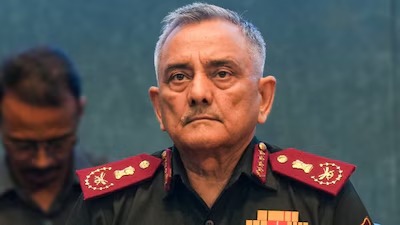
New Delhi: Chief of Defence Staff General Anil Chauhan on Friday said that India’s Operation Sindoor forced Pakistan to introduce constitutional amendments and restructure its higher military organisation, signalling deep vulnerabilities exposed during the operation.
Speaking at the Pune Public Policy Festival 2026 at the Gokhale Institute of Politics and Economics, General Chauhan said Pakistan’s post-operation changes reflected an implicit acknowledgement that its existing command and control mechanisms had failed under pressure. He noted that the restructuring undertaken by Islamabad revealed serious flaws that became evident during the conflict.
The CDS highlighted that Pakistan abolished the position of Chairman of the Joint Chiefs of Staff Committee and replaced it with a Chief of Defence Forces. Alongside this, new bodies such as the National Strategy Command and the Army Rocket Forces Command were created. According to General Chauhan, these changes have resulted in an unusual concentration of land, joint, and strategic military authority in the hands of a single individual.
He cautioned that such centralisation runs against the fundamental principle of jointness and reflects a land-centric outlook on warfare. General Chauhan warned that this approach could create internal stresses within Pakistan’s military establishment and weaken balanced decision-making during future crises.
Addressing queries on whether Operation Sindoor had triggered changes within India’s own military structure, the CDS clarified that while the office does not directly command the three service chiefs, it plays a critical operational role. As the permanent Chairman of the Chiefs of Staff Committee, he said decisions are taken collectively to ensure integrated planning and execution across services.
General Chauhan added that the CDS has direct oversight of emerging operational domains, including space, cyber, electromagnetic, and cognitive warfare, as well as special forces functioning under the Integrated Defence Staff framework.
He also spoke about the evolving nature of global warfare, stating that technology has overtaken geography as the primary driver of military strategy. While future conflicts may increasingly involve non-contact and non-kinetic methods, he stressed that conventional land warfare remains harsh and manpower-intensive, particularly along contested borders with Pakistan and China.
India, he said, must be prepared for both technology-driven engagements and the possibility of prolonged attritional conflicts, even as it seeks to avoid them. Drawing lessons from Operation Sindoor and earlier actions such as the Uri surgical strikes, Doklam and Galwan standoffs, and the Balakot air strikes, General Chauhan said India is now moving towards a standardised, integrated command system. He expressed confidence that joint theatre commands would be operational ahead of the revised timeline.
Sorry, there was a YouTube error.