New Delhi: Delhi’s ‘No PUC, No Fuel’ directive came into effect on Thursday with authorities claiming firm action across the capital. On the first day, thousands of vehicles were penalised and tens of thousands of Pollution Under Control certificates were issued. However, on-ground enforcement remained inconsistent and air quality continued to deteriorate through the day.
Official figures show that 3,746 vehicles were challaned within 24 hours for not possessing a valid PUC certificate. During the same period, over 61,000 certificates were issued across the city, reflecting a sharp rise in compliance efforts by vehicle owners following the rollout of the rule.
Checks were intensified at Delhi’s entry points, where joint teams screened nearly 5,000 vehicles. As part of the drive, hundreds of non-compliant vehicles were turned back, while several heavy vehicles were diverted via peripheral expressways to reduce pollution load within city limits.
Despite these measures, Delhi’s air quality worsened steadily through the day. The Air Quality Index crossed deep into the very poor range by morning and approached the severe category by night, highlighting the limited immediate impact of the restrictions during peak winter pollution.
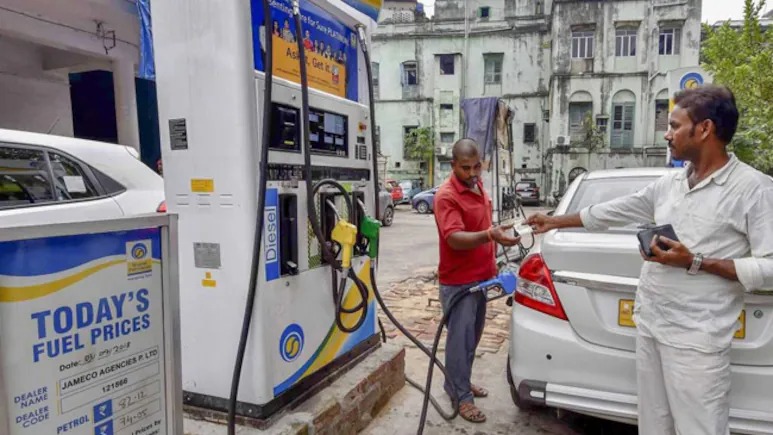
Ground-level observations revealed gaps in enforcement at multiple petrol pumps. While government notices warning motorists about the mandatory PUC requirement were clearly displayed, enforcement officials were absent at several locations. Fuel station staff maintained that they were only responsible for informing customers and not for enforcing compliance, citing the risk of confrontations with motorists.
The Environment Minister, who conducted surprise inspections, acknowledged that uniform enforcement would take time. He said that even partial implementation would be considered a success at this early stage and stressed that the focus of the initiative was public health rather than issuing fines.
Alongside the fuel restriction, civic agencies reported action on other pollution sources, including large-scale road sweeping, deployment of anti-smog guns, shutdown of illegal dumping sites and processing of legacy waste. However, the impact of these steps was not immediately reflected in air quality readings.
As Delhi grapples with another polluted winter spell, the first day of the ‘No PUC, No Fuel’ rule underscored a familiar challenge: strong policy intent, uneven execution on the ground, and environmental conditions that remain stubbornly unchanged.
Sorry, there was a YouTube error.