Team Goemkarponn
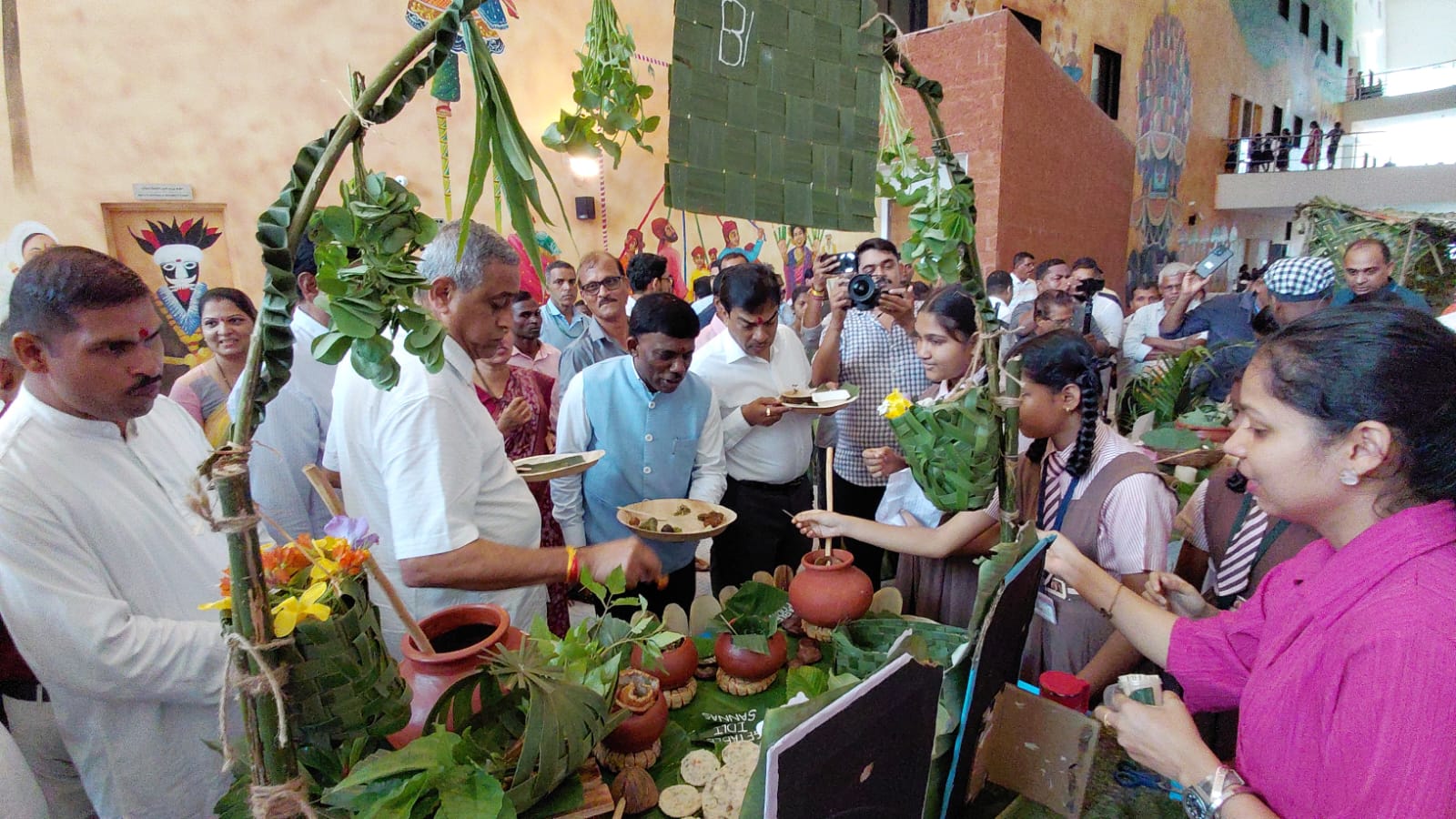
Canacona: In a vibrant celebration of Goa’s culinary and ecological heritage, the 3rd Ranbhaji Festival held in Canacona on Saturday saw an unprecedented display of over 550 unique dishes made from 43 different types of monsoon-grown wild vegetables, including both vegetarian and non-vegetarian preparations.
The festival was inaugurated by Power Minister Sudin Dhavalikar, in the presence of Speaker and Canacona MLA Ramesh Tawadkar, BJP State President Damodar Naik, Padma Shri Awardee Chaitram Pawar, and CMC Chairperson Sara Naik Desai. Organized by the Shree Balram Charitable Trust in association with the Goa Biodiversity Board, Department of Agriculture, and Department of Tribal Affairs, the event brought together a vast and diverse group of community participants.
A total of 182 groups — including 139 Self-Help Groups (SHGs), 20 Anganwadis, and 23 high schools — showcased their culinary skills, presenting between 3 to 8 dishes per group. Innovative preparations like Ranbhaji Cake, Ranbhaji Momos, Pulao, Cutlets, and traditional wet dishes such as Keell and Tero featured prominently.
Adding a twist to the traditional fare, some SHGs even presented non-vegetarian versions of ranbhaji using dried prawns and eggs. Volunteers at the stalls made it a point to inform visitors about the ingredients to distinguish between vegetarian and non-vegetarian options.
Within just 30 minutes of the festival opening to the public, many dishes were consumed by the hundreds of eager visitors. Despite the rush, a variety of preparations remained available throughout the afternoon. Many dishes were served alongside Polle, Idli, Chutney, and Sanna, enhancing the festive flavour.
The festival also included live cooking demonstrations by students from Shri Mallikarjun & Chetan Manju Desai College and several schools. Notably, the IIHM Young Chef Olympiad 2025 team also participated, drawing attention to the global culinary potential of traditional Goan wild vegetables.
Health and medicinal benefits of ranbhaji—ranging from digestion and blood purification to relief from joint pain and eye care—were explained at several stalls. Many groups also sold raw wild vegetables at reasonable rates, with recipes provided to promote home cooking.
Speaking at the event, Power Minister Dhavalikar lauded Speaker Tawadkar’s leadership, stating:
“This is the real way to preserve Goan heritage. Merely speaking of Goykarponn isn’t enough—action like this protects our culture. Many of these wild vegetables are unfamiliar even to my generation.”
A humorous moment arose when Dhavalikar remarked that wild vegetables like Taikilo are now rarely seen, prompting Tawadkar to correct him, saying it’s still common in Canacona. Dhavalikar responded with a laugh, “It may be here, but it’s nearly extinct on our side.”
The event concluded at the Sanjay Bandekar Auditorium, where a book on Ranbhaji, published by Shree Balram Charitable Trust, was officially released.
Festival Coordinator Savita Tawadkar welcomed the dignitaries, while several officials addressed the gathering, including Director of Art & Culture Vivek Naik, Biodiversity Board Member Secretary Pradeep Sarmukadom, Chief Conservator of Forests Kamalnath, and Director of Agriculture Sandeep Phaldesai. Also present were sarpanchas from Agonda, Shristhal, and Khotigao, along with councillors and panchayat members.
The festival highlighted not just the richness of Goa’s monsoon flora but also the deep community spirit driving the preservation of its culinary traditions.