New Delhi: Pakistan has reportedly appealed to India to reverse its decision to suspend the Indus Waters Treaty, expressing deep concern over the potential consequences for its water security. The Ministry of Water Resources in Islamabad has sent a formal letter to New Delhi requesting the resumption of river flows as per the long-standing water-sharing agreement, media reports said.
The move comes in the wake of the April 22 Pahalgam terror attack in Jammu and Kashmir, in which 26 civilians — mostly tourists — were killed. India, citing national security, suspended the 1960 World Bank-brokered treaty, demanding that Pakistan must “credibly and irrevocably” end its support for terrorism.
The decision to suspend the treaty was backed by the Cabinet Committee on Security (CCS), marking the first time India has taken such a step since the agreement was signed more than six decades ago.
In its plea, Pakistan warned that halting the treaty could trigger a domestic crisis. However, Indian officials have dismissed the concerns, accusing Pakistan of continuing to use terrorism as an instrument of state policy.
Prime Minister Narendra Modi, in his first address following Operation Sindoor—India’s swift military response to the Pahalgam attack—made New Delhi’s position clear:
“Water and blood cannot flow together. Terror and talks cannot happen at the same time. Terror and trade cannot happen simultaneously,” he declared.
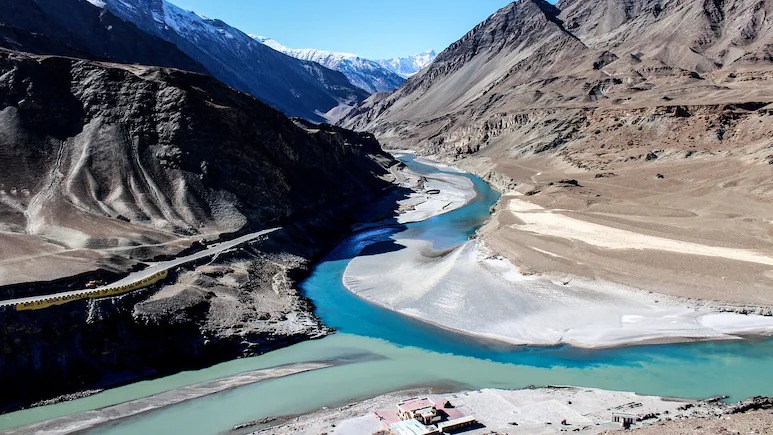
The Indus Waters Treaty grants Pakistan exclusive rights to the three western rivers—Indus, Jhelum, and Chenab—while India retains control over the eastern rivers—Sutlej, Beas, and Ravi. As per the treaty, Pakistan receives about 70% of the total water, while India gets around 30%.
Following the suspension, the Indian government unveiled a three-tier strategy—short-term, mid-term, and long-term—to ensure no water from Indian rivers flows unutilised into Pakistan.
Union Jal Shakti Minister CR Paatil confirmed that all efforts are being made to harness India’s share completely, including accelerating the completion of stalled hydroelectric projects.
Foreign Ministry Spokesperson Randhir Jaiswal reiterated India’s firm stance:
“The Indus Waters Treaty was based on goodwill and friendship. Pakistan has trampled on these principles by fostering cross-border terrorism for decades.”
Sources suggest a high-level meeting is expected this week involving Home Minister Amit Shah, Water Resources Minister Paatil, Power Minister Manohar Lal Khattar, Agriculture Minister Shivraj Singh Chouhan, and senior officials to review India’s water management plans and fast-track pending projects. This will be the third such meeting since the treaty was suspended.
India has made it clear that any future dialogue with Pakistan will focus solely on two issues: ending terrorism and the return of Pakistan-Occupied Kashmir.
Sorry, there was a YouTube error.