Team Goemkarponn
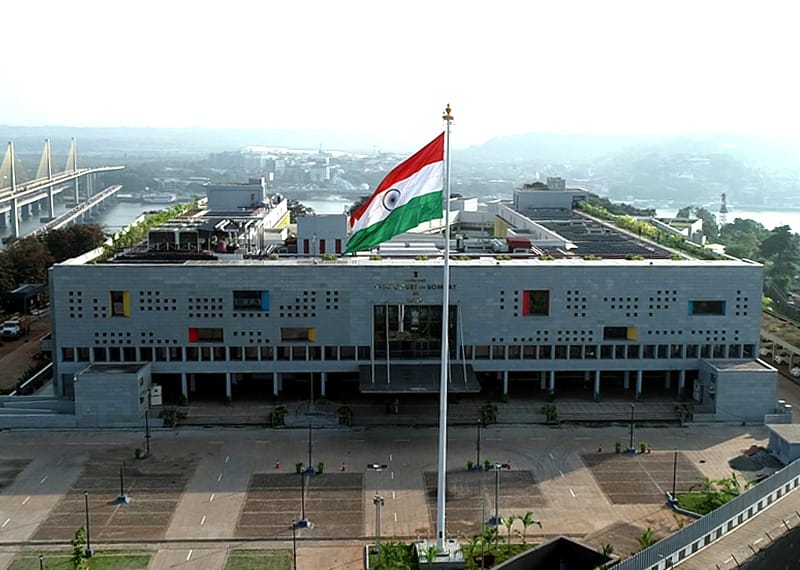
A public interest litigation has been moved before the Bombay High Court at Goa, alleging serious environmental and water-related damage arising from highway construction activity along the Verna Highway.
The petition has been filed by advocate Moses Pinto, appearing in person, who has sought urgent judicial intervention to halt what he describes as poorly planned and ecologically harmful earthworks being executed by the Public Works Department (Highways). The case names multiple authorities as respondents, including the Union and State governments, the PWD (Highways), the South Goa Collector, the Goa State Pollution Control Board, the Water Resources Department and the Directorate of Agriculture.
As per the PIL, large-scale earthmoving operations commenced in the first week of January 2026 on the MDR-38 stretch at Verna. The petitioner alleges that heavy machinery such as excavators and backhoe loaders were deployed to dump laterite soil, raise artificial embankments and fill low-lying areas within a floodplain.
The petition states that the land along MDR-38 forms part of a natural agricultural floodplain and seasonal wetland that has traditionally supported paddy cultivation. According to the petitioner, the area sustains around 20 to 30 small and marginal farmers and also serves as a natural drainage corridor, groundwater recharge zone and ecological buffer.
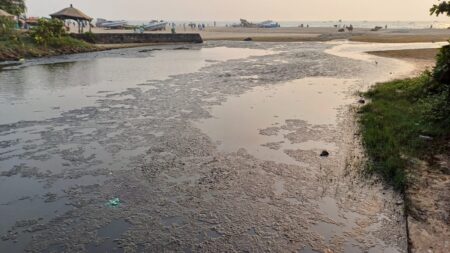
It has been alleged that the ongoing works have obstructed natural drainage paths, buried existing watercourses and disrupted the free movement of water across the floodplain. The PIL claims that compacted soil embankments have led to water stagnation, resulting in waterlogging of adjoining paddy fields.
Concerns have also been raised about the drainage infrastructure being installed as part of the project. The petitioner has alleged that concrete culvert pipes were laid without proper alignment to existing channels, aggravating water blockage instead of improving flow.
The petition argues that interference with the floodplain system can cause reverse water flow, reduced soil aeration and long-term damage to agricultural land. It warns that if the embankment works continue, the area could face permanent waterlogging and irreversible soil degradation.
The PIL further claims that the project was initiated without conducting an environmental impact assessment, hydrological analysis or ecological evaluation. Photographs submitted with the petition reportedly show dumping of soil, blocked drainage routes and standing water. According to the petitioner, the damage is ongoing and requires immediate court intervention to prevent irreversible consequences.