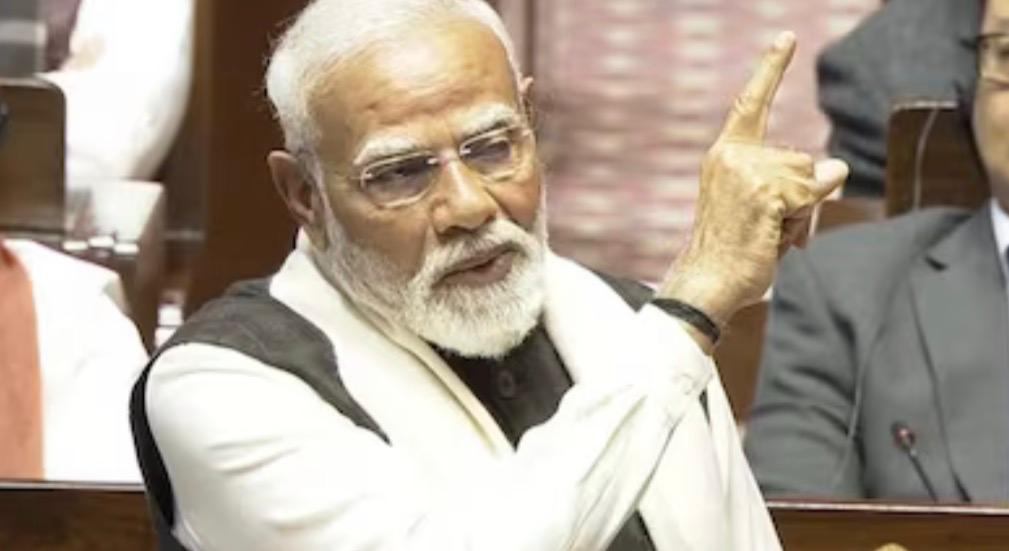
New Delhi: Prime Minister Narendra Modi on Thursday made a veiled reference to Aam Aadmi Party leader Sanjay Singh during his speech in the Rajya Sabha, triggering a sharp political exchange between the ruling side and the opposition benches. Without naming the MP directly, the Prime Minister said that some people seem to prefer the word black, a comment widely interpreted as aimed at Singh and past allegations linked to him.
During his address, Modi also criticised the AAP government in Delhi, stating that it had become synonymous with liquor related controversies and had constructed what he described as a sheeshmahal that turned into a symbol of public anger. He added that such a party had no moral authority to lecture others on governance or ethics.
The Prime Minister remarked that everyone has a past and hinted at certain leaders having questionable connections with the term black. Bharatiya Janata Party members viewed this as a clear reference to earlier accusations that Singh was involved in selling party tickets illegally, charges that the AAP leader has repeatedly rejected.
Sanjay Singh reacted strongly soon after the speech, calling the remarks a personal and political attack born out of frustration. He alleged that the Prime Minister was unsettled because the opposition had raised questions regarding the Epstein files and demanded answers from the government.
The AAP MP further accused the Centre of bowing to foreign pressure and declared that his party would not allow national interests to be compromised. He said he was ready to face imprisonment again but would continue to oppose what he described as attempts to undermine the country.
The heated exchange came a day after the Prime Minister could not deliver his speech in the Lok Sabha due to continuous protests by opposition members. Scenes of disruption were witnessed in the House, with several MPs occupying seats on the treasury side and blocking proceedings.
The BJP later termed the protest an attempt to target the Prime Minister, while opposition parties defended their actions as democratic resistance. The episode has added to the growing confrontation in Parliament, where both sides remain locked in an intense political battle.