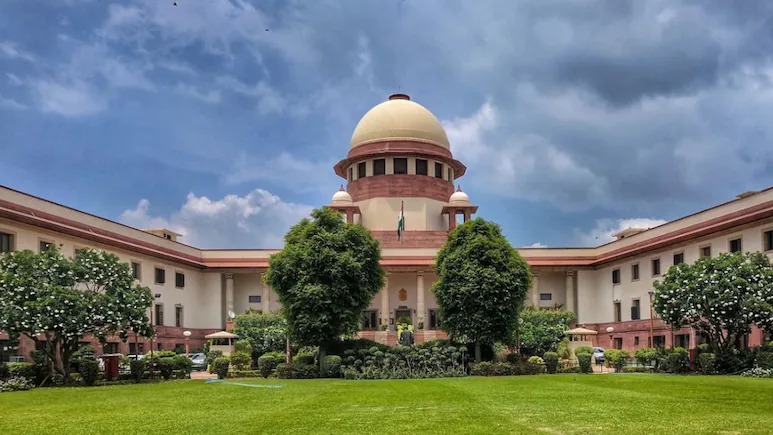
New Delhi: In a significant constitutional ruling, the Supreme Court has affirmed that the President of India and state Governors are not required to act within fixed timelines when considering Bills passed by legislatures. A five-judge Constitution bench held that their decisions in this process cannot be subjected to judicial scrutiny unless a Bill has already become law.
The judgment was delivered in response to questions referred by the President after a previous order in the Tamil Nadu Governor case appeared to set time limits for clearing pending Bills. The President had sought clarity on whether Governors must follow the advice of the elected government when choosing from the options provided under Article 200 of the Constitution. She also highlighted Article 361, which grants constitutional immunity by stating that neither the President nor Governors can be made answerable before any court for actions taken in office.
Chief Justice BR Gavai, heading the bench, said that imposing deadlines contradicted the constitutional framework. He underscored that the functioning of these high offices is guided by constitutional conventions and cannot be supervised through strict judicial timelines. The bench also comprised Justices Surya Kant, Vikram Nath, PS Narasimha and AS Chandurkar.
The court further rejected the earlier idea of granting Bills “deemed assent” once a court-imposed deadline expired. According to the bench, allowing judicially created timelines to trigger automatic approval would amount to the judiciary taking over executive authority, which is outside the limits of the Constitution.
The issue gained prominence after a two-judge bench in April, while hearing a case involving the Tamil Nadu government’s complaint of prolonged delays by the Governor, declared ten Bills as “deemed to have been assented” from the day they were presented. That ruling had also advised the Union government to avoid taking positions on the legal validity of Bills and, instead, refer such matters to the Supreme Court when necessary.
Today’s ruling settles the legal debate by reinforcing that while high constitutional authorities are expected to act with respect for democratic norms and legislative will, courts cannot prescribe deadlines for their decisions in the Bill assent process.
Sorry, there was a YouTube error.