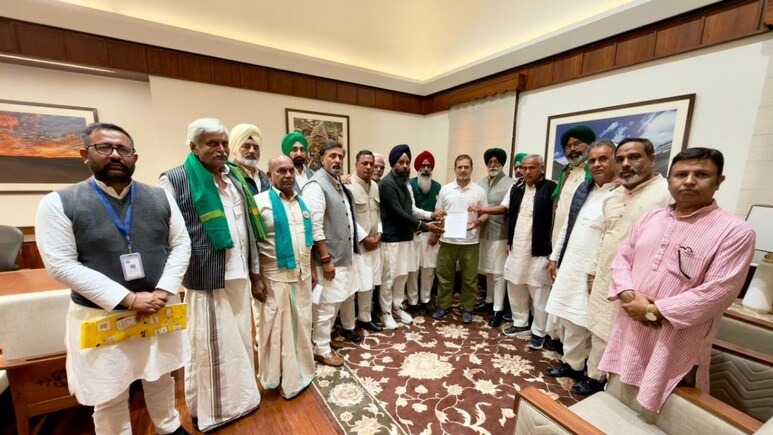
New Delhi: Congress leader Rahul Gandhi met a group of farmers to discuss their concerns over the proposed India–US trade arrangement, triggering a sharp response from the Bharatiya Janata Party, which dismissed the interaction as a choreographed political exercise.
The meeting centred on apprehensions within sections of the farming community about how the trade framework with the United States could affect agricultural markets, pricing structures and long-term rural security. Gandhi listened to farmers who said they feared increased exposure to global competition and inadequate safeguards for domestic producers. He maintained that any international agreement must be shaped with farmers’ interests at its core.
The Congress leader underlined that agricultural stakeholders should be consulted before final decisions are taken. He argued that policy discussions conducted at the highest levels must reflect ground realities, especially when millions depend on farming for their livelihoods. According to him, trade negotiations cannot be viewed in isolation from their social and economic consequences.
The BJP, however, accused Gandhi of using the meeting to create a political narrative. Party leaders said the event appeared carefully arranged to project opposition to the government’s economic strategy. They contended that the trade discussions are being conducted with national interest in mind and insisted that farmers’ welfare remains protected within the framework being negotiated.
Government representatives maintained that the interim understanding with the United States is aimed at strengthening economic ties while preserving sensitive sectors. They rejected claims that the agreement would harm Indian agriculture, stating that speculation without full knowledge of the deal’s contours was misleading.
Farmers present at the meeting raised issues ranging from potential tariff reductions to fears of cheaper imports undercutting local produce. Some questioned whether adequate safeguards would be built into the final agreement. Gandhi responded by assuring them that their concerns would be amplified politically and that transparency from the government was essential.
Supporters of the Congress leader described the outreach as a necessary engagement with grassroots voices, arguing that trade policies should not be finalised without hearing from those directly affected. They said the meeting reflected a broader effort to reconnect with agrarian communities and highlight economic anxieties that might otherwise be overlooked.
The exchange has added another layer to the political debate over the India–US trade framework. As discussions around economic cooperation gain momentum, the disagreement underscores how trade policy often becomes intertwined with domestic politics.
With elections approaching in several states, both sides appear keen to frame the narrative in their favour. For the opposition, the focus is on safeguarding farmers and demanding greater clarity. For the ruling party, the emphasis is on economic growth and strategic partnerships.
As negotiations continue, the central question remains how the government will address farmers’ apprehensions and communicate the specifics of the deal. The political sparring may intensify, but the long-term impact will depend on the details of the agreement and the confidence it inspires among those whose livelihoods are tied to the land.