


For far too long, the issue of unregulated taxi fares in Goa has remained a festering sore—one that successive governments have hesitated to confront head-on.
The state’s traditional taxi operators, largely local, have played an important role in the tourism ecosystem. But their reluctance to embrace regulation and technology has also been a major stumbling block to improving transport services in a state that depends heavily on tourism.
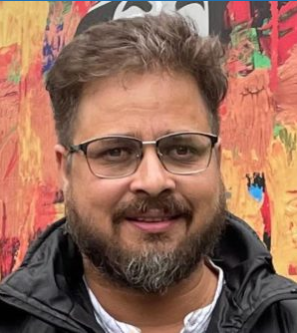
In this context, Calangute MLA and former minister Michael Lobo’s stand represents a significant and overdue shift in political will. For the first time, Lobo—himself closely aligned with various tourism and business interests—has called out the inconsistency and arbitrariness in the taxi sector.
His remarks are not only timely but necessary, as Goa stands at a crossroads between safeguarding traditional livelihoods and ensuring a fair, transparent experience for tourists and locals alike.
Lobo rightly pointed out that taxi fares cannot be dictated by whims and fancies. The absence of a standard, transparent fare system continues to tarnish Goa’s image as a tourist-friendly destination.
Countless visitors have returned home with stories of being overcharged, intimidated, or stranded due to the taxi lobby’s refusal to adopt basic norms such as fare meters or app-based bookings. In any other state or country, this would be unthinkable.
Equally pertinent is Lobo’s assertion that taxi operators cannot keep hiding behind the excuse of not understanding or having access to technology.
The state government has offered multiple opportunities over the years—through app-based systems like GoaMiles and other digital platforms—for taxi drivers to onboard themselves and regulate their services.
Instead, most have dug in their heels, refusing to participate in any model that brings transparency or accountability.
Lobo’s position, then, is not an attack on local taxi drivers, as some may try to paint it. Rather, it is a call for reform from within—a challenge to the sector to evolve and stay relevant in a rapidly changing world.
There is nothing inherently wrong in protecting local livelihoods. In fact, it is the government’s duty to do so. But protectionism without reform breeds stagnation, inefficiency, and, ultimately, public resentment.
The often-repeated fear of “outsiders taking over traditional businesses” is not unfounded. However, the answer is not to create monopolies or fortresses.
The answer is to upskill, modernize, and compete. Local taxi drivers have the home advantage, the local knowledge, and the goodwill of the community.
What they lack is standardization, digital integration, and, at times, customer service ethics. These are not insurmountable hurdles.
Lobo’s call for dialogue is also noteworthy.
His statement that taxi operators “cannot run away” and must “sit across the table and negotiate” is a reminder that change cannot be imposed from above.
It must be a collaborative process—one that includes policymakers, transport officials, tourism stakeholders, and most importantly, the taxi operators themselves. This is a conversation that is long overdue.
At the heart of this issue lies a simple question: what kind of Goa do we want? Do we want a state where tourists feel safe, informed, and welcome? Or do we want one where they are left at the mercy of unregulated transport and opaque pricing? The answer should be clear.
For the taxi industry, the writing is on the wall. Either evolve with the times or risk becoming irrelevant.
Technology is no longer optional—it is integral to customer experience, business efficiency, and transparency. In a post-pandemic world, where digital services have become the norm, clinging to outdated systems is not just regressive—it’s unsustainable.
Michael Lobo’s remarks may have ruffled feathers, but they reflect the growing impatience among Goans and tourists alike. The time for excuses is over. What is needed now is leadership, cooperation, and vision.
It is time for Goa’s taxi operators to meet the moment. And for the government to stand firm in ensuring a system that works—for everyone.
Sorry, there was a YouTube error.
