 Goemkarponn desk
MARGAO: Many in the tavernas and pubs in Goa are betting on what will reach a hundred first, beer or petrol.
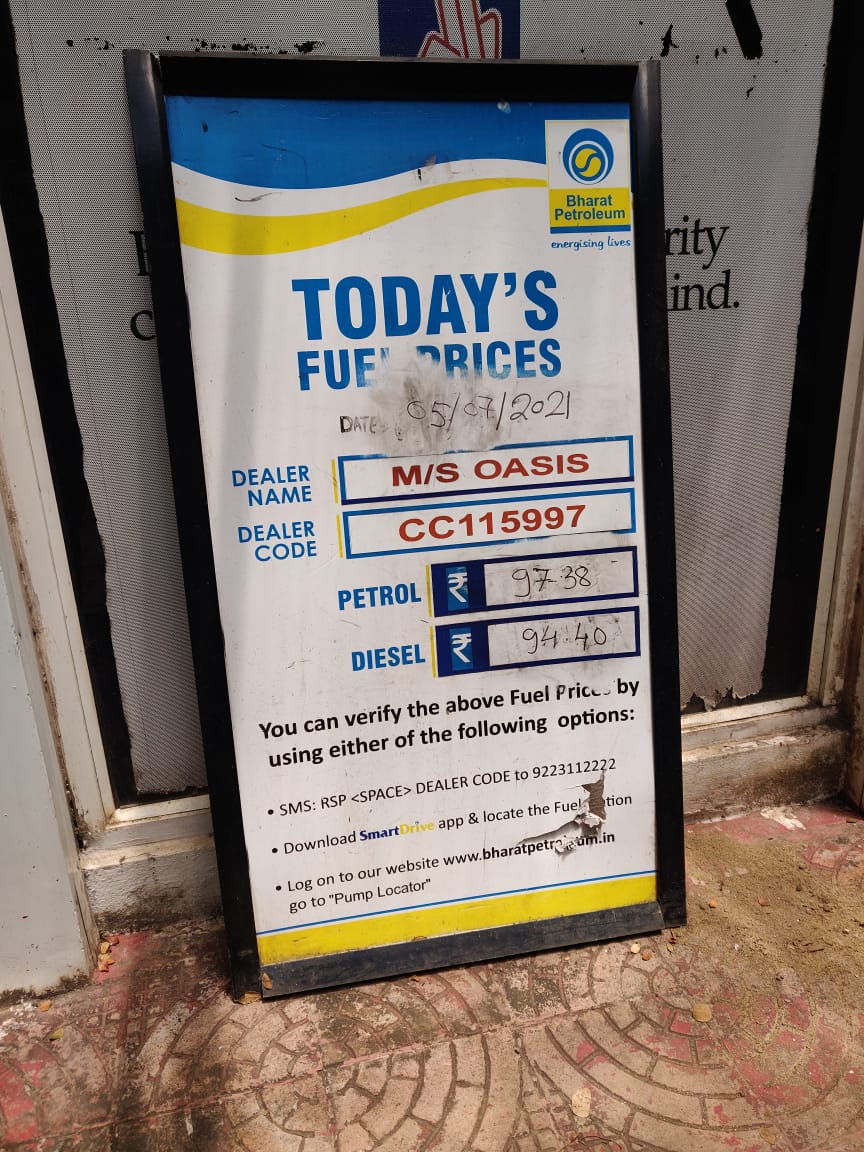
With the beer bottle still sold at eighty-five rupees in wholesale, the petrol and diesel prices are closing on on hundred and reach a century any time soon, the unprecedented rise in fuel prices has not only upset their predictions but the monthly budget of the common man and woman across Goa too.
With the relentless increase in fuel prices since the last few months, the commoners’ struggle to survive has become more complex. This has brought a double whammy to their existence as the Covid-19 pandemic since the beginning of last year had already broken the backbone of a common person, many feel.
Despite the government knowing that the poor people of this country are rendered jobless and penniless, the government has been increasing the rate of fuel which is now crossed over Rs 100 per litre in some states, while in Goa it is getting close to a hundred, a motorcycle owner said.
In such a scenario, the cost of driving a petrol or a diesel vehicle daily is becoming a lot more challenging.
When translated this means driving a petrol car will cost you almost Rs 6 per km.
This figure may look normal to some, but when you compare it with the loss of income and the cost of furling last year, you realise how expensive driving a petrol car has become.
Since Goa doesn’t offer an easy option to switch over to CNG or electric vehicles, people are forced to use their existing cars and even buy the new vehicles operating on fossil fuels, many feel.
Factually speaking, driving a petrol car is 150 per cent more expensive than driving a CNG fuel car. When you compare the same with an all-electric vehicle, around 500 per cent informed an automotive engineer.
Driving a CNG fuel car is cheaper when compared to petrol. It costs around Rs 2.5 per km, and electric vehicles cost you only Rs 1 per km.
Driving a diesel vehicle is also not different. To drive a diesel vehicle for a kilometer, you have to spend almost Rs 5.
With diesel also going hand in hand when it comes to an increase in the rates, it is also expected to touch triple digits soon.
Many states have created enough infrastructure to allow switchover from vehicles driven by fossil fuel in liquid form to CNG and electric cars, but Goa has lagged behind many felt.
Many of the users of the regular vehicle to whom this correspondent spoke said that the government of the day has to understand that the increase in prices of onions and sugar has made the parties in power lose and if the government doesn’t lower the costs of fuel than they should be well aware that they will have to climb a mountain to convince the voters to vote for them when the state goes for elections in less than a year from now.
Sorry, there was a YouTube error.