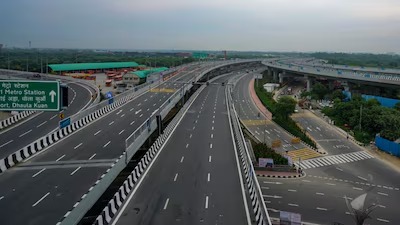
New Delhi: India’s high speed road infrastructure has recorded a major milestone, with the total operational length of high speed corridors crossing 5,000 kilometres during the current financial year, according to the Economic Survey 2025–26. The survey underlines the central role played by roads and highways in driving India’s infrastructure growth and economic integration.
As of December 2025, the operational high speed corridor network stood at 5,364 kilometres, reflecting an addition of 735 kilometres over the past year. This translates to an average expansion of nearly two kilometres per day. In comparison, the total length stood at 4,629 kilometres in December 2024, highlighting the sustained pace of construction.
A detailed analysis shows that national high speed corridors accounted for the bulk of this growth. Their operational length increased from 2,474 kilometres at the end of 2024 to 3,052 kilometres by December 2025, with an average addition of about 1.6 kilometres per day. State high speed corridors also witnessed steady expansion, growing from 2,155 kilometres to 2,312 kilometres over the same period.
The survey places this progress in a longer-term perspective, noting that India had just 550 kilometres of high speed corridors in 2014. At that time, national corridors measured only 93 kilometres, while state corridors were estimated at around 460 kilometres. Over a decade, the network has expanded more than tenfold, driven by sustained public investment and policy reforms.
The Economic Survey states that the expansion aims to align freight movement speeds with global benchmarks. Looking ahead, the government has set a target of developing a high speed corridor network of around 26,000 kilometres by FY33. Of this, over 9,300 kilometres are already under implementation.
The survey also highlights a new policy framework for access controlled ring roads and bypasses in cities with populations exceeding one lakh. These projects will use innovative financing models such as land pooling and value capture to support urban growth.
According to the report, India’s road sector is now shifting from rapid capacity creation to a sharper focus on logistics efficiency and technology integration. Priority is being given to highways connecting ports, inland water transport terminals, and industrial corridors to reduce logistics costs. Together with railways, road transport and highways continue to account for more than half of the Centre’s capital expenditure, reinforcing their role as the backbone of national infrastructure development.