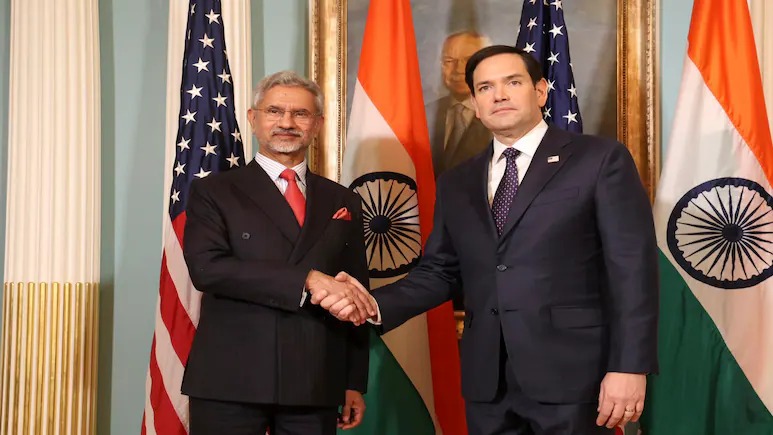
New Delhi: In a stark contrast to the retaliatory measures adopted by nations like China and Canada, India has chosen not to fire back at the U.S. over the newly imposed 26% tariffs. Instead, India is focusing on hastening its trade negotiations with the U.S., aiming for an early bilateral trade agreement that could benefit both countries. This strategic move comes after External Affairs Minister S. Jaishankar and U.S. Secretary of State Marco Rubio emphasized the importance of concluding these talks expeditiously.
In the face of these tariffs, India is refining its trading dynamics to mitigate their impact on exporters. By not retaliating and instead pursuing a “win-win” trade deal, India aims to navigate through the economic turbulence created by U.S. President Donald Trump’s reciprocal tariffs policy. This approach positions India favorably compared to its Asian peers, who have faced even higher tariffs.
Jaishankar and Rubio’s discussions underscored their mutual agreement on the significance of an early conclusion to the bilateral trade agreement. India and the U.S. have set an ambitious target to finalize at least part of this agreement by autumn 2025, which could effectively resolve their tariff differences.
To facilitate these negotiations, India has taken several conciliatory steps. It has lowered tariffs on high-end motorcycles and bourbon whiskey and eliminated a tax on digital services impacting major U.S. tech firms. The Commerce Ministry is closely monitoring the situation, gathering feedback from exporters, particularly those vulnerable to the tariffs.
India and the U.S. maintain a robust strategic partnership built on shared values and economic interests. They aim to more than double their bilateral trade to $500 billion by 2030. This partnership is fueled by significant mutual investments, with the U.S. being one of India’s largest sources of foreign direct investment, while Indian companies have made substantial investments in the U.S., creating thousands of jobs.
Sorry, there was a YouTube error.