Team Goemkarponn
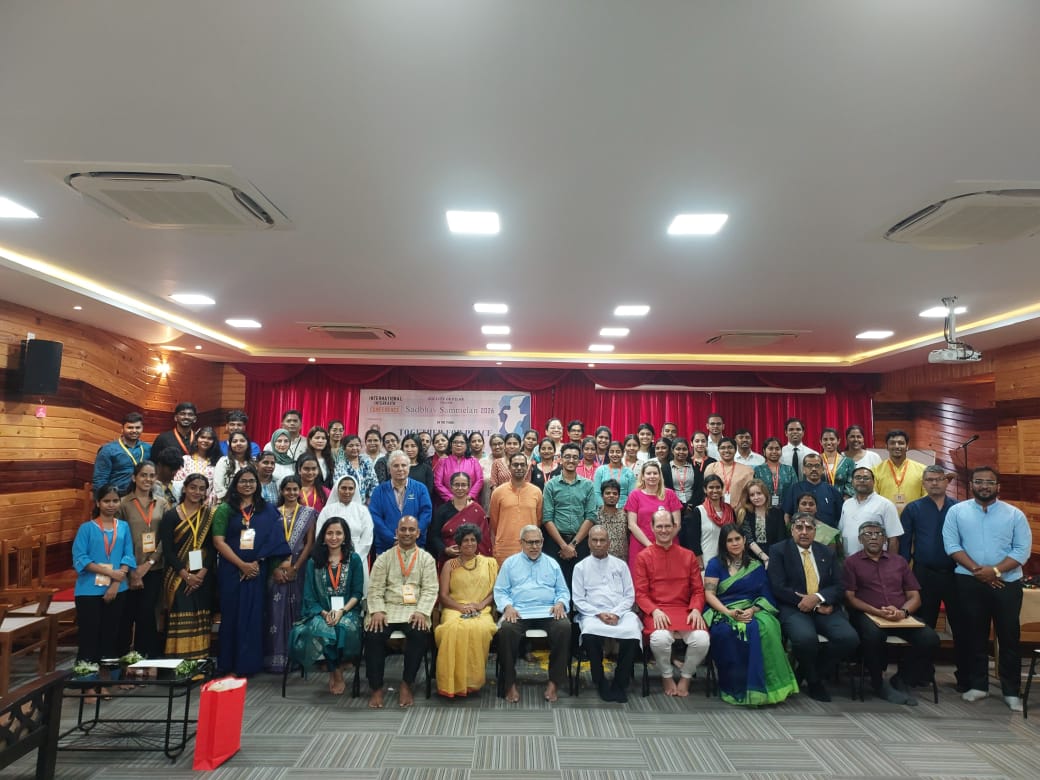
Pilar: The Fourth Edition of the Sadbhav Sammelan concluded on Friday on a note of hope and collective resolve, reaffirming the belief that sustained dialogue and meaningful action are essential to building peaceful and inclusive communities.
Guided by Ahana Rao, participants were encouraged to reflect deeply on their roles within their respective communities and to pledge themselves as catalysts for positive change. The sessions emphasised introspection, empathy and the responsibility of translating faith and values into everyday action.
Jisha Poonachan, who anchored the event, said the Sammelan stood apart for the authenticity and depth of its conversations. “What struck me most was how conversations here felt less like formal discussions and more like people carefully placing their truths on a shared table, trusting others to hold them with respect,” she reflected.
Highlighting the need for continuity in engagement, Sankalp Naik observed that genuine understanding is born through repeated and sustained dialogue. “Repeated dialogue creates a safe space where individuals feel comfortable asking questions and sharing personal experiences,” he said.
Student participation added a fresh perspective to the discussions. Sahil Awasthi, a student of Fr. Agnel College of Arts and Commerce, Pilar, noted that many present-day conflicts stem from miscommunication rather than belief systems themselves. “Many conflicts arise not from religion itself, but from misunderstanding and lack of communication,” he remarked.
Sadbhav Sammelan is an initiative of the Society of Pilar and was jointly organised by Sadbhav, Pilar Pilgrim Centre; Fr. Agnel College of Arts and Commerce, Pilar; and the Nirmala Institute of Education. The event was held in collaboration with the Apostolate of Interreligious Dialogue of the Archdiocese of Goa and Daman, the Solidarity Forum of Pilar Seminary, the School of Sanskrit, Philosophy and Indic Studies of Goa University, and the Directorate of Higher Education, Government of Goa.
The Sammelan concluded by reaffirming the conviction that when dialogue replaces division and faith is translated into concrete action, peace can evolve from an ideal into a lived reality.