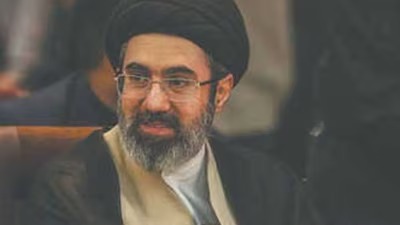
New Delhi: Iran’s newly appointed Supreme Leader Mojtaba Khamenei is safe despite reports suggesting he had been injured during the ongoing conflict involving Israel and the United States, according to a statement shared by the son of Iran’s president.
Yousef Pezeshkian, who also serves as a government adviser, addressed the speculation in a message posted on his Telegram channel. He said he had reached out to contacts with knowledge of the situation and was informed that Mojtaba Khamenei was in good health.
Earlier reports had described the Iranian leader as a “wounded veteran” of the conflict, though no official details were provided about any possible injuries. The absence of clear information had fuelled widespread speculation about his condition.
Sources within Iran also indicated that the powerful Islamic Revolutionary Guard Corps played a decisive role in backing Mojtaba Khamenei’s appointment as the country’s supreme leader. According to senior insiders, the Guards pushed strongly for his selection, believing he would support their strategic and political priorities.
The move reportedly faced resistance from several political and religious figures within the establishment, which delayed the public announcement of his appointment for several hours. Despite the opposition, the Guards’ influence ultimately ensured the succession proceeded.
The conflict in the region has further strengthened the position of the Revolutionary Guards within Iran’s power structure. Observers say their role in shaping the leadership transition highlights the growing influence of military institutions in national decision making.
Several insiders and former officials have warned that the expanding authority of the Guards could lead to a significant shift in governance. Some believe Iran risks evolving into a system where military leadership holds dominant power while the country’s religious framework remains largely symbolic.
Such changes, analysts suggest, could reshape both Iran’s domestic political landscape and its approach to foreign policy as tensions in the region continue to escalate.
Sorry, there was a YouTube error.