Team Goemkarponn
PANAJI: Drishti Marine’s newly introduced Seahorse temporary floating platforms have significantly strengthened lifesaving operations along Goa’s high-footfall beaches, with 34 rescues recorded since their deployment in December 2025.
According to Drishti Marine, the offshore Seahorse platforms—positioned at Calangute, Candolim, Miramar and Baina beaches—have added an extra layer of vigilance during the peak tourist season. Of the total rescues, 11 were carried out in December 2025, while January 2026 has already seen 23 rescues at these locations.
In December, seven rescues were reported at Calangute, three at Candolim and one at Miramar. In January so far, Miramar accounted for the highest number with 13 rescues, followed by Calangute with seven and Candolim with three. No rescues were reported at Baina during this period.
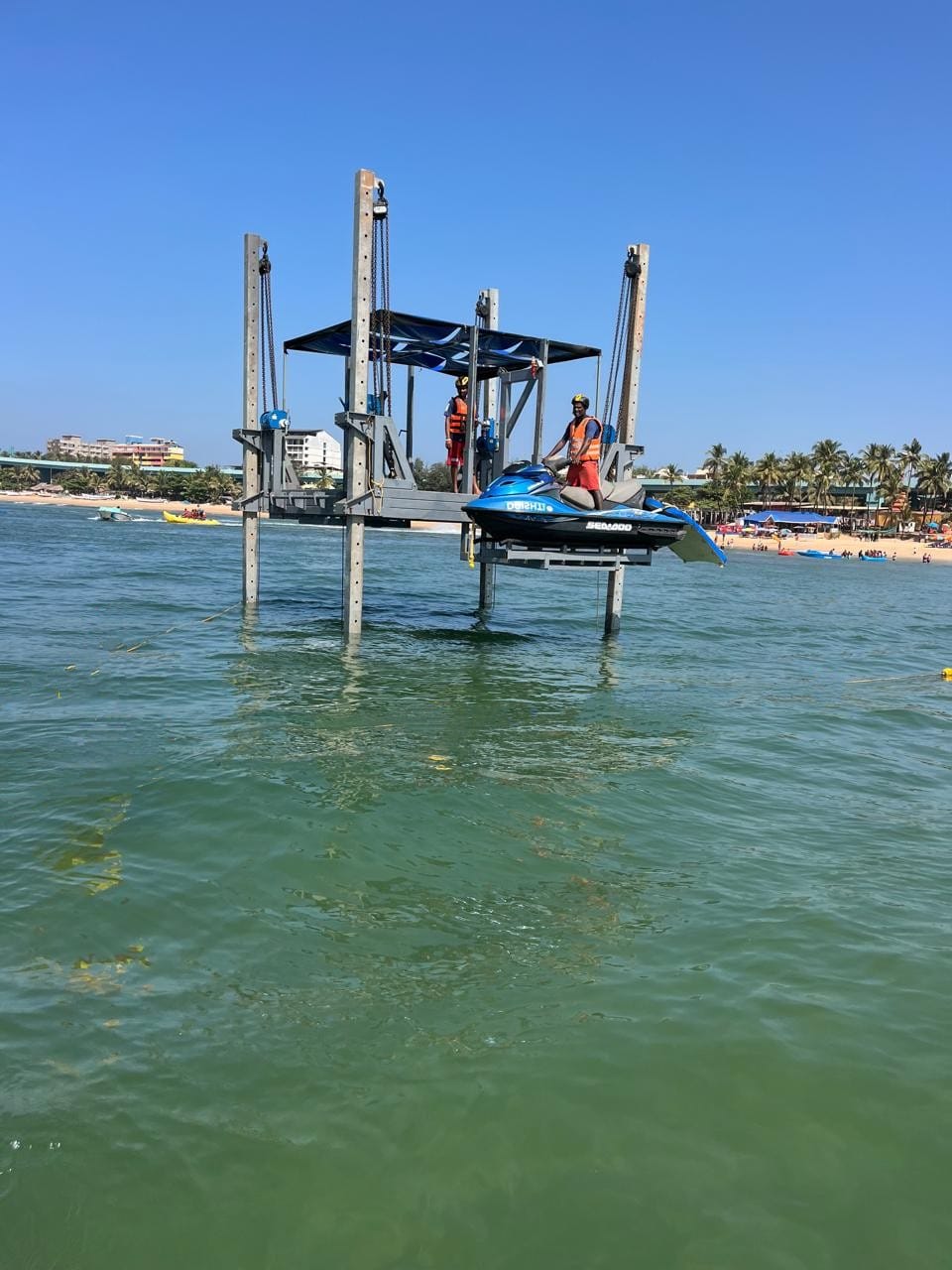
The Seahorse platforms have been deployed in addition to existing shore-based infrastructure such as beach towers and patrol units. Positioned offshore, the platforms allow lifesavers to monitor swimmers from vantage points at sea, improving visibility in crowded zones where land-based observation can be challenging.
Recently, one of the Seahorse platforms played a key role in rescuing 13 students from the National Institute of Oceanography (NIO) who were in distress off Miramar beach.
Drishti Marine’s General Manager (Operations), Austin Collaco, said the platforms have drastically reduced response times. “In many situations, every second matters. With the Seahorse platforms, our teams are positioned closer to the risk zone. What earlier took three to five minutes can now be addressed in under a minute,” he said.
Collaco added that lifesavers can now be dispatched within seconds of receiving an alert. “Within about five seconds, a jet ski is on its way. It can cover 100 metres in two to four seconds, depending on sea conditions. That speed can make the difference between life and death,” he noted.
Each Seahorse unit can accommodate four to six lifesavers and is equipped with a jet ski ramp, rescue boards, surfboards and rescue tubes. The elevated platforms also provide a wider field of view of nearshore swimming areas, enabling quicker identification of emergencies.
The initiative comes amid growing concerns over sand erosion along several beaches, which has affected the stability and placement of conventional lifesaver towers. The floating Seahorse platforms, designed as temporary units, can be anchored to the seabed and positioned around 20 to 30 metres from shore, depending on tidal and depth conditions.
Of the four platforms initially deployed, two are currently stationed at Miramar and Baina beaches.
At present, over 450 Drishti Marine lifesavers are deployed across 24 beaches in North Goa and 30 beaches in South Goa, along with inland tourist locations such as Dudhsagar waterfalls and Mayem lake, ensuring comprehensive coverage across the state.