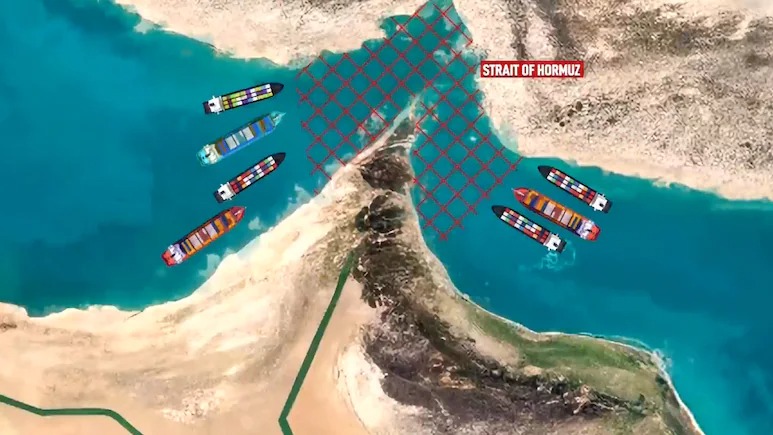
New Delhi: A new maritime route through the Strait of Hormuz has begun to see limited use by commercial vessels, potentially offering relief to global shipping that has faced disruptions in the strategically vital waterway. The alternative path runs through Oman’s territorial waters and avoids both the traditional international shipping lane and the recently controlled route through Iranian waters.
Data from Automatic Identification System tracking and remote sensing analysis shows that at least four large vessels have recently used this route while transporting oil, liquefied natural gas and other cargo. The ships travelled within Oman’s maritime limits after entering the waters near the Emirati city of Ras Al Khaimah and then moved along the Musandam Peninsula.
Among the vessels were two Very Large Crude Carriers named Habrut and Dhalkut, both carrying significant oil cargo. Maritime tracking indicated that the tankers were transporting around two million barrels of crude from Saudi Arabia and the United Arab Emirates. A Panama flagged LNG carrier, Sohar, also followed the route after departing from the port of Al Hamriyah in the United Arab Emirates. Its cargo status was listed as partially laden, though details about its load were unclear.
An Indian flagged cargo vessel identified as MSV Quba MNV 2183 was also recorded using the route. The ship departed Dubai on March 31 and was last tracked in open waters roughly forty kilometres from the Omani port of Dibba. Its destination and cargo details have not yet been confirmed.
The development comes after significant disruption in the Strait of Hormuz following heightened tensions in the region. Iran began targeting vessels with missiles and drones after coordinated airstrikes by the United States and Israel on February 28. The narrow passage is one of the world’s most critical energy corridors, with nearly one fifth of global oil and gas supplies passing through it.
In response to the conflict, Iran established a longer maritime corridor through its territorial waters, requiring ships to seek clearance and undergo identity checks. Reports indicated that vessels carrying crude oil were also required to pay a fee based on the volume of cargo.
The recent movement of ships through Oman’s waters coincides with reports of fires at a key Iranian naval facility on Qeshm Island, raising further questions about the evolving security situation in the region.