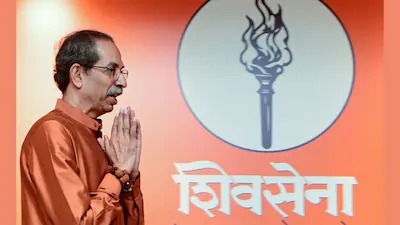
Mumbai: Uddhav Thackeray’s faction of the Shiv Sena could secure the post of mayor in the Brihanmumbai Municipal Corporation (BMC) even without holding an outright majority in the civic body, party leaders said, outlining two possible scenarios to reach the top post.
The BMC election results earlier this month left no party with a clear majority, triggering a complex political situation in India’s richest civic body. The Maha Vikas Aghadi (MVA), comprising the Shiv Sena (Uddhav Balasaheb Thackeray group), the Nationalist Congress Party and the Indian National Congress, fell short of the halfway mark, forcing leaders to explore alternative strategies to form the civic administration.
Shiv Sena (UBT) leaders said their priority is to form a stable and workable administration in the BMC, even if it means forming alliances or securing outside support on crucial votes. One option involves securing conditional backing from other parties on the day of the mayoral election, while another involves negotiating support from independent councillors to ensure enough votes.
The party’s strategy reflects the fact that the mayoral post does not require a simple majority at all times but can be won through coalition building and tactical voting on the day of the election. Officials said they were confident of the ability to gather enough support from like-minded parties and independents, even if the MVA’s numbers remain below the majority threshold.
The two scenarios outlined by the Shiv Sena (UBT) include securing direct support from smaller parties and independents, or forming an arrangement where support is extended only for the mayoral vote, without committing to a full coalition government. Leaders indicated that they were also open to a broader agreement that could include sharing key administrative posts, such as deputy mayor and committee chair positions, to ensure smooth functioning of the civic body.
A key factor in the party’s calculations is the desire to avoid political instability and administrative paralysis in the BMC, which is responsible for critical civic services in Mumbai, including water supply, sanitation, roads and health services. Leaders argued that a clear leadership structure was essential for the city’s governance, especially as monsoon season approaches.
The Shiv Sena (UBT) also suggested that its potential victory in the mayoral race could be strengthened if the opposition is fragmented or unable to present a united front. The party’s leaders said they were ready to work with any group that supported a stable civic administration and would prioritise Mumbai’s development needs over political rivalry.
However, the party’s claims are likely to be challenged by rival factions, including the Shiv Sena led by Eknath Shinde and the BJP, both of which are also looking to form the BMC administration. These parties have their own strategies and are expected to pursue alliances with smaller parties and independent councillors to secure the mayoral post.
The mayoral election in the BMC is expected to be closely watched, as the outcome will determine the direction of civic governance in Mumbai for the next term. The election process will involve a vote among elected corporators, and the party that manages to secure the required numbers will form the civic administration.
With negotiations ongoing and stakes high, the BMC’s political landscape remains fluid, and the final outcome will depend on how parties manage alliances, seat-sharing arrangements and support from independent councillors.
The Shiv Sena (UBT) leaders said they were confident that the party’s approach would ensure Uddhav Thackeray’s election as mayor, and they remained optimistic that a workable arrangement would be finalised soon to avoid prolonged uncertainty in the civic body.