Team Goemkarponn
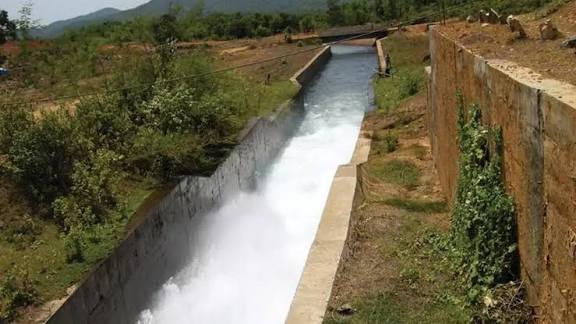
TILLARI: The Goa government has proposed revisions to the command area of the Tillari Irrigation Project, dropping certain land parcels while adding new areas to improve the utilisation of irrigation facilities.
As per a notification published in the Official Gazette, about 3.65 lakh square metres (36.53 hectares) of land has been proposed for removal from the existing command area of the project.
The parcels identified for deletion are located in Dhargal and Torsem in Pernem taluka; Calangute, Assagao, Anjuna, Parra and Revora in Bardez taluka; and Latambarcem, Sarvan, Bicholim and Mayem in Bicholim taluka.
Meanwhile, the government has proposed to include nearly 22.96 lakh square metres (292.96 hectares) of land within the project’s command area. The additional land parcels fall in the villages of Payem, Pernem, Corgao and Paliem across Pernem and Bicholim talukas.
The Command Area Development Board approved the changes after partially modifying its earlier notification issued on November 25, 2024. The revision followed representations from landowners who had requested the exclusion of specific survey holdings from the project’s command area.
During its meeting held on January 7, 2026, the Board agreed to omit the identified lands, provided the applicants deposit compensation at the government-notified rate of ₹105.70 per square metre within 30 days from the publication of the notification.
The notification has invited objections and suggestions from the public within a 30-day period. These may be submitted to the Member Secretary of the Command Area Development Board at the Office of the Superintending Engineer, Circle-II, Water Resources Department, Karaswada.
Officials said the proposed inclusion of an additional 22.96 lakh square metres aims to ensure better and more comprehensive utilisation of the irrigation infrastructure created under the Tillari project.
Sources associated with the project indicated that the revision forms part of an effort to rationalise irrigation coverage. Some areas, particularly in parts of Bardez, have seen rapid urban development and a gradual decline in agricultural activity, reducing the need for irrigation.
An engineer linked to the project said that in certain locations irrigation networks were also found to be technically difficult to implement due to terrain conditions. In contrast, the newly proposed areas are largely agricultural and better suited to the existing canal distribution system.
Experts note that large irrigation schemes are often adjusted over time to match changing ground realities and to address gaps between the irrigation potential created and the actual area receiving water.