New Delhi: A British F-35B Lightning II fighter jet, one of the world’s most advanced stealth aircraft, has become an unexpected logistical and diplomatic challenge after it was forced to make an emergency landing in Thiruvananthapuram, Kerala, nearly three weeks ago. Despite multiple attempts at on-site repairs, the aircraft remains grounded. The United Kingdom is now considering airlifting the jet back home using a C-17 Globemaster transport aircraft — but not before it undergoes a complex dismantling process.
The F-35B, a short take-off and vertical landing (STOVL) variant developed by Lockheed Martin, is equipped with highly classified technology and stealth systems, making its removal and transport a highly sensitive task. Only engineers specifically trained and certified by Lockheed Martin are authorised to dismantle the aircraft. This intricate process must be carried out under close supervision by British military personnel to ensure that no part of the aircraft’s stealth systems or software is compromised. Every bolt, screw, and panel removed must be catalogued, logged, and security-coded to prevent any data leaks or security breaches.
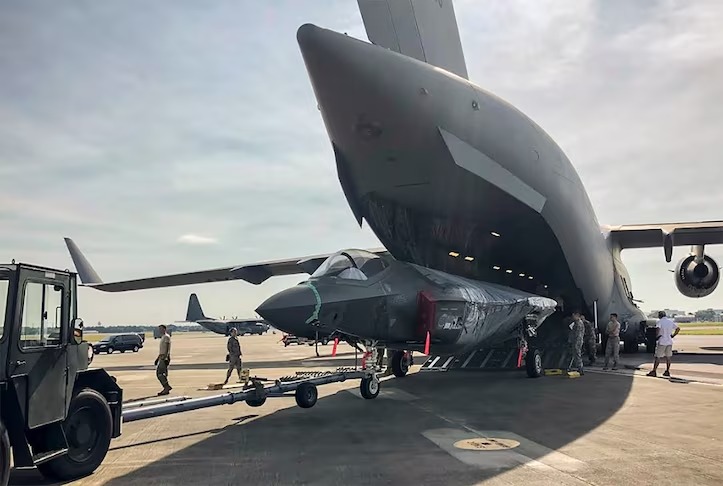
The mission to transport a dismantled F-35 by air has precedence. In May 2019, the United States successfully carried out a similar operation when an F-35 was transported by a C-17 Globemaster from Eglin Air Force Base in Florida to Hill Air Force Base in Utah. That project took four years and cost nearly $200,000 to develop a safe and secure protocol for airlifting the aircraft. The current situation in Kerala is expected to follow similar procedures, albeit under even tighter scrutiny given the geopolitical sensitivities.
The F-35B is not just any aircraft — it is a floating fortress of modern warfare. With advanced radar-evading coatings, encrypted communications systems, artificial intelligence-powered decision-making tools, and the capability to carry nuclear weapons, the F-35 is a cornerstone of 21st-century aerial combat. Its data fusion capabilities and survivability features make it a dominant force in any conflict scenario, and as such, foreign access to its systems is a serious concern for operating nations like the UK and the US.
This fighter is also part of the most expensive military programme in history, with the global F-35 programme projected to cost over $1.7 trillion. Beyond its price tag, the F-35 represents a major strategic asset. Its removal from Indian soil is not just about reclaiming hardware — it is a matter of national security and technological secrecy. The presence of such a sensitive jet in a foreign country for an extended period is a rarity and requires careful coordination between British defence officials, Lockheed Martin experts, and Indian authorities.
As the UK prepares to retrieve the jet, the dismantling and secure transport operation will be carried out with utmost precision and discretion. This unexpected incident has become a powerful reminder of the real-world challenges that come with managing advanced defence technologies and the global security protocols that govern them.
Sorry, there was a YouTube error.